The channel that works when the grid doesn't
SMS for utilities is a case where the medium's oldest limitation becomes its decisive strength. When the power is out, your customer's Wi-Fi is down, their smart-home app is dark, and their phone is rationing a shrinking battery. A push notification needs data and a charged device running your app. An email needs them to open a client. SMS needs neither — it reaches a basic handset on its last bar of battery with no data connection at all.
What utilities send by SMS
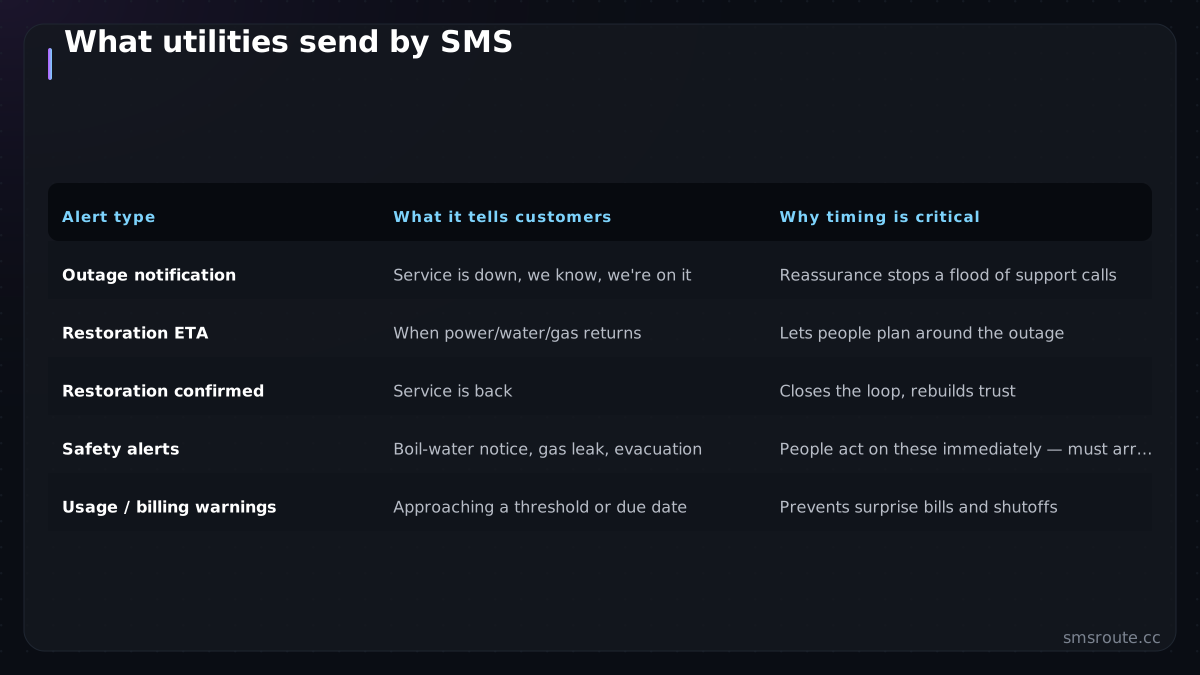
| Alert type | What it tells customers | Why timing is critical |
|---|---|---|
| Outage notification | Service is down, we know, we're on it | Reassurance stops a flood of support calls |
| Restoration ETA | When power/water/gas returns | Lets people plan around the outage |
| Restoration confirmed | Service is back | Closes the loop, rebuilds trust |
| Safety alerts | Boil-water notice, gas leak, evacuation | People act on these immediately — must arrive |
| Usage / billing warnings | Approaching a threshold or due date | Prevents surprise bills and shutoffs |
The support-cost angle is real too: a proactive outage text ('we're aware of the outage in your area, crews are dispatched, estimated restoration 4pm') prevents a wave of calls to a call center that's already slammed during the outage. One message to the affected area does what thousands of individual calls would, faster and calmer.
Reliability is the whole job
So the engineering emphasis shifts entirely toward making sure messages actually arrive.
- Monitor delivery, don't assume it — reconcile delivery receipts and alert on failures; for safety messages, know what didn't land so you can escalate.
- Use quality direct routes — a grey route that filters silently is unacceptable when the message might be an evacuation notice.
- Keep contact data clean — validate numbers so alerts reach the current customer, not a disconnected line.
- Plan for scale spikes — an area-wide outage means a burst of thousands of messages at once; queue and rate-limit under the provider ceiling so the burst delivers rather than throttles.
- Have redundancy — for critical infrastructure messaging, a fallback provider turns a route outage into a non-event, per the reliability guide.
SMSRoute's published route pages list delivery from $0.004/message (premium direct-carrier corridors up to $0.035) with sub-100ms median submission and ~98.6% delivered success (smsroute.cc route pages, 2026).
Getting it right
- Segment by service areaOutage alerts go to affected customers only; a citywide blast for a neighborhood outage erodes trust and buries the people who actually need it.
- Write for clarity under stressPlain, specific, actionable: what's happening, what to do, when it resolves. People read these while stressed and low on battery — no ambiguity, no fluff.
- Confirm consent but recognize the categoryService and safety alerts are largely transactional (the customer relationship implies them), but keep opt-in clean for non-critical usage/marketing messages per the compliance rules.
- Test the whole pipeline before you need itSend to seed numbers across your area and confirm end-to-end delivery and timing. You don't want to discover a routing problem during an actual emergency.
SMSRoute is a no-KYC SMS API with crypto billing (BTC, ETH, USDT, XMR, LTC, and SOL), and for utility alerting the relevant qualities are the boring, essential ones: direct carrier routes, auditable delivery receipts so you know what landed, and the throughput to handle an area-wide burst. We're the delive
FAQ
Why do utilities use SMS for outage alerts?
What alerts should a utility send by text?
How reliable does utility SMS need to be?
Do utility service alerts need customer opt-in?
Send your first SMS in 5 minutes
No KYC. Pay with BTC, ETH, USDT, XMR, LTC, and SOL. Live routes to 149 countries.
Get an API key →