Why texting candidates works
Why does texting candidates work for recruitment?
Texting candidates works because SMS open rates exceed 98%, with most replies within 3 minutes. It bypasses crowded email inboxes and voicemail, reaching candidates instantly on their personal devices. For recruiters, this means faster responses, higher engagement, and a more personal touch that builds trust and reduces time-to-hire.
SMS for recruitment works for a blunt reason: candidates read texts, and they ignore recruiting emails and unknown calls. Text recruiting is deliberate, stage-specific communication that gets responses when the other channels go dark. First outreach, screening, interview scheduling, offer, onboarding. Agencies that implement it and track it properly report 15-30% reductions in cost-per-hire, mostly from time savings and higher conversion of the pipeline they already have.
Two-way texting, where candidates ask questions and get answers, is what separates a strong employer brand from an impersonal one.
The plays that get responses
What SMS recruitment strategies get the best responses?
Top-performing SMS recruitment plays include personalized job alerts, quick interview confirmations, and follow-up reminders. Keep messages under 160 characters, include a clear call-to-action like 'Reply YES to apply,' and send during business hours. Using SMSRoute’s API, you can automate these plays with real-time delivery reports to track engagement.
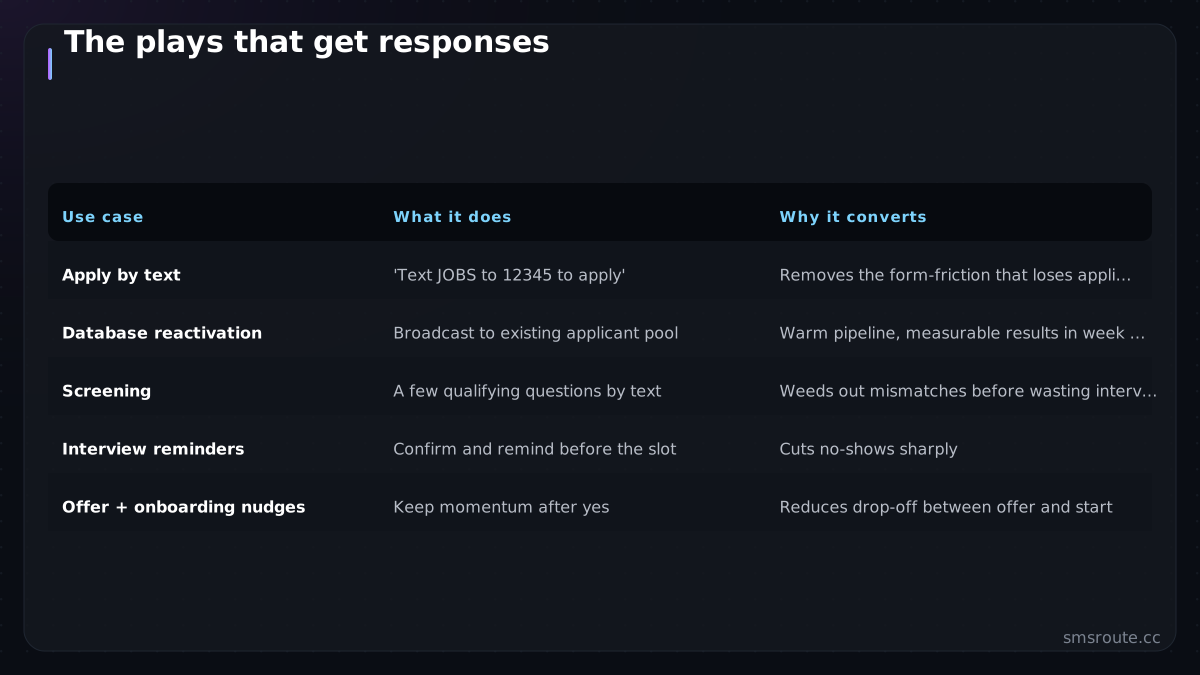
| Use case | What it does | Why it converts |
|---|---|---|
| Apply by text | 'Text JOBS to 12345 to apply' | Removes the form-friction that loses applicants |
| Database reactivation | Broadcast to existing applicant pool | Warm pipeline, measurable results in week one |
| Screening | A few qualifying questions by text | Weeds out mismatches before wasting interview time |
| Interview reminders | Confirm and remind before the slot | Cuts no-shows sharply |
| Offer + onboarding nudges | Keep momentum after yes | Reduces drop-off between offer and start |
The two highest-ROI starting points are apply-by-text on existing job postings and signage, and a broadcast to your current applicant database — both need minimal setup and show results within the first week. Everything else builds from there. Screening by text is the quiet winner: a short qualifying exchange saves hours of interview time down the line.
Conversation beats broadcast
The single design decision that makes recruitment SMS work is making it two-way. A candidate who can reply (like 'yes, 3pm works', 'is this remote?', or 'what's the pay range?') is having a conversation with your brand. A candidate who gets a blast is being marketed at. Enable inbound replies and route them to a recruiter or a bot. The same channel that felt like spam becomes the most personal one you have.
- Let them reply, always: a no-reply recruiting text is a missed conversation and a worse candidate experience.
- Keep it human and specific: name the role, the company, the next step. Generic 'exciting opportunity' texts read as scams.
- Respond fast: the value of SMS is speed. A reply that sits for a day wastes the channel's main advantage.
- Use it stage-appropriately: screening questions, scheduling, reminders. Not a firehose of every open role to everyone.
Consent keeps it legal
How do you ensure SMS recruitment complies with consent laws?
Consent is legally required for SMS recruitment under TCPA and GDPR. Always obtain explicit opt-in via a web form, text keyword, or verbal agreement. Include an opt-out instruction in every message. SMSRoute supports custom sender IDs and DLR webhooks to document consent, keeping your campaigns compliant and audit-ready.
- Get opt-in before texting applicantsSMS consent is required by law (TCPA in the US). Capture it at application or via a clear opt-in keyword, with proper opt-in wording, and log it. The FCC's TCPA guidelines outline the requirements for prior express consent.
- Honor opt-out instantlySTOP and plain-language opt-outs suppress immediately. A candidate who opts out should never get another recruiting text, across every campaign.
- Respect quiet hours and cadenceDon't text candidates at odd hours or bombard them. Treat frequency the way any compliant program does, and keep it conversational rather than high-volume.
- Mind data sensitivityCandidate data is personal data. Minimise what you store and for how long, following the data-minimisation discipline that also shrinks your risk surface.
Spam-style blasting is illegal AND ineffective. You don't trade compliance for results; you get both from the same discipline.
Setting it up
SMSRoute is a no-KYC SMS API with crypto billing (BTC, ETH, USDT, XMR, LTC, and SOL). It's the delivery layer beneath a recruiting-SMS workflow that your ATS or texting platform drives. The pattern that wins in 2026: capture consent cleanly, start with apply-by-text and a database reactivation, make everything two-way so candidates can converse, respond fast, and keep it stage-appropriate. Do that and SMS becomes the channel candidates actually answer. It cuts your cost-per-hire while building the employer brand a spammy blast would wreck. SMSRoute's published route pages list delivery from $0.004/message (premium direct-carrier corridors up to $0.035) with sub-100ms median submission and ~98.6% delivered success (smsroute.cc route pages, 2026).
Related reading
FAQ
Does SMS work for recruiting?
What are the best SMS use cases for recruitment?
Do I need consent to text job candidates?
Why is two-way texting better than blasting for recruiting?
Send your first SMS in 5 minutes
How can I send my first recruitment SMS in 5 minutes?
Sign up at SMSRoute with just an email. No KYC needed. Fund your account with crypto (BTC, ETH, USDT) or fiat, then generate an API key. Use our REST API or SMPP bind with code examples in Python/PHP/Go/Node. Send your first message to any of 149 countries from $0.004 per message, with real-time DLR webhooks.
No KYC. Pay with BTC, ETH, USDT, XMR, LTC, and SOL. Live routes to 149 countries.
Get an API key →