High value, high scrutiny
Why is SMS in insurance considered high value and high scrutiny?
Insurance SMS is high value because it directly impacts claims, renewals, and customer retention, but it faces high scrutiny due to strict TCPA regulations. SMSRoute helps you navigate this with no-KYC signup, crypto billing, and adaptive multi-route delivery across 149 countries, ensuring compliance and reliability.
SMS for insurance delivers measurable results. Renewal reminders sent at 30, 14, and 3 days out consistently lift renewal rates. Claims-status texts keep policyholders informed and cut inbound calls to overloaded service teams. But insurance is also one of the more scrutinized places to text. Policies carry sensitive personal and financial data. TCPA litigation rose nearly 27% into 2026 (FCC TCPA filings). And record-keeping obligations from NAIC and state regulators sit on top of the messaging rules.
What insurers send, and which consent it needs
What types of SMS do insurers send and what consent is required?
Insurers send claim updates, renewal reminders, and policy alerts. These require prior express consent under TCPA. SMSRoute supports this with real-time DLR webhooks and automatic failover, making it easy to track consent and delivery. Start with free test credits to verify routes before funding.
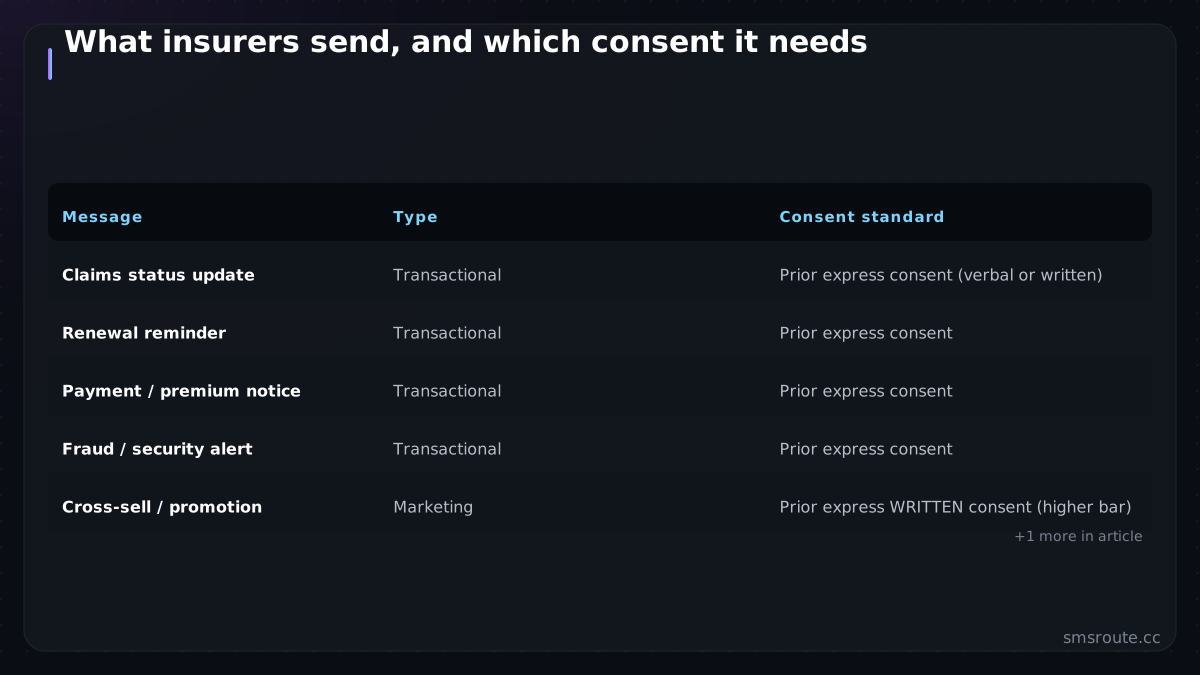
| Message | Type | Consent standard |
|---|---|---|
| Claims status update | Transactional | Prior express consent (verbal or written) |
| Renewal reminder | Transactional | Prior express consent |
| Payment / premium notice | Transactional | Prior express consent |
| Fraud / security alert | Transactional | Prior express consent |
| Cross-sell / promotion | Marketing | Prior express WRITTEN consent (higher bar) |
| New-lead outreach | Marketing | Prior express written consent |
The line that matters: transactional servicing messages (claims, renewals, payments) need prior express consent, satisfiable verbally or in writing when the number was shared in a directly related context. Marketing messages (cross-sell, promotions, lead gen) need the higher bar of prior express *written* consent. Mixing the two — slipping a promotion into a claims text — pulls the whole message under the stricter marketing rule and is a classic TCPA trap.
The dual-consent workflow
How does the dual-consent workflow work for insurance SMS?
The dual-consent workflow ensures both opt-in and opt-out are recorded for each message. SMSRoute's REST API and SMPP binds let you integrate this seamlessly. With 99.9% uptime and automatic refunds for failed messages, you maintain compliance and trust without extra effort.
- Separate the two consent typesCapture transactional-servicing consent when a policyholder shares their number for policy purposes, and a distinct written marketing opt-in (a checkbox on quote forms or applications) for promotions. Never conflate them.
- Keep message classes cleanA claims update contains claims information — nothing promotional. The moment an offer appears, it's a marketing message needing written consent. Enforce this in your templates, not just policy.
- Honor opt-out through any channelPer the FCC's 2025 revocation rule, opt-outs made by any reasonable method (text, email, call, form) must be honored within 10 business days — real-time is best practice. Wire suppression globally, the way our opt-out handling describes.
- Register for A2P 10DLCUS insurance SMS runs on registered 10DLC for reliable delivery; unregistered traffic gets filtered — the number-type basics apply.
TCPA lawsuits rose nearly 27% into 2026, and insurance is a favored target because of the mon
Sensitive data and record-keeping
How does SMSRoute handle sensitive data and record-keeping for insurance?
SMSRoute ensures secure handling of sensitive insurance data with encrypted API calls and real-time delivery logs. Our no-KYC signup and crypto billing add privacy layers. Failed messages are automatically credited, and unused balance is refundable, keeping your records clean and compliant.
- Minimize PII in the body — 'Your claim status has updated, log in to view details' beats putting claim specifics or health information in a text. Sensitive data stays behind authentication, the data-minimisation principle.
- Archive messages — NAIC record-keeping guidance and state insurance regulations require retaining message records; build archiving in from the start, not as an afterthought.
- Validate numbers — reaching the wrong person with policy information is both a delivery waste and a privacy problem; validate before sending, and note that reassigned numbers are a specific TCPA liability.
- Monitor delivery for time-sensitive notices — a payment-due or claims text that silently fails has real consequences; reconcile delivery receipts.
SMSRoute is a no-KYC SMS API with crypto billing (BTC, ETH, USDT, XMR, LTC, and SOL) — the delivery layer beneath an insurance messaging program. Your systems own the consent workflo
FAQ
Can insurance companies text policyholders?
What's the difference between transactional and marketing insurance texts?
How do insurers stay TCPA-compliant with SMS?
How should insurers handle sensitive data in texts?
Send your first SMS in 5 minutes
No KYC. Pay with BTC, ETH, USDT, XMR, LTC, and SOL. Live routes to 149 countries.
Get an API key →