At the gate, delivery is everything
Here's what ticketing sends by SMS, why timing and reliability dominate, and how to get it right.
What ticketing sends
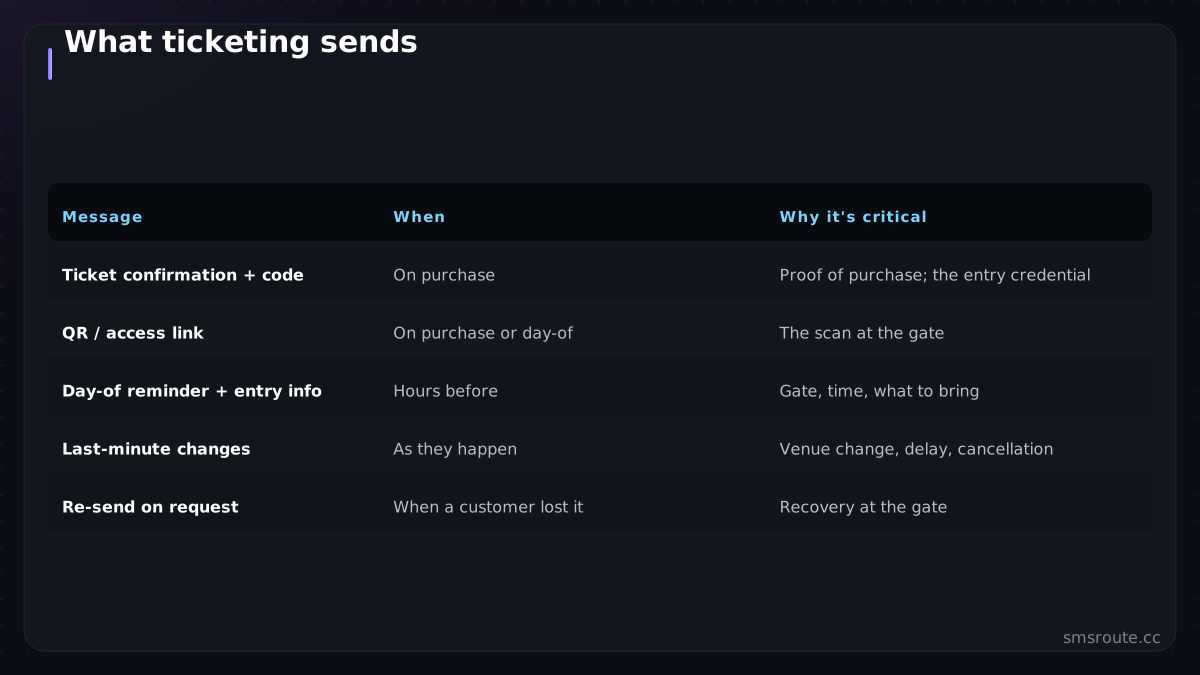
| Message | When | Why it's critical |
|---|---|---|
| Ticket confirmation + code | On purchase | Proof of purchase; the entry credential |
| QR / access link | On purchase or day-of | The scan at the gate |
| Day-of reminder + entry info | Hours before | Gate, time, what to bring |
| Last-minute changes | As they happen | Venue change, delay, cancellation |
| Re-send on request | When a customer lost it | Recovery at the gate |
The access code or QR is the credential. It's what gets scanned at entry, so its delivery is non-negotiable. The day-of reminder carries the practical details (gate, time). And the ability to re-send instantly matters more here than almost anywhere: a customer who can't find their code needs it re-sent in seconds, at the gate, not after a support ticket. Build the re-send path deliberately.
Timing and capacity: the two hard parts
- Prioritize direct routesA grey route that filters or delays is unacceptable when the message is an entry credential. Use quality direct routes and monitor delivery so you know codes landed. The GSMA sets standards for direct carrier interconnection that ensure reliable delivery.
- Plan for the capacity spikeAn on-sale moment or a day-of blast means thousands of messages at once. Queue and pace under the throughput ceiling — the batch-send discipline — so the burst delivers rather than throttles. The FCC has noted that network congestion can impact SMS delivery during high-volume events.
- Make re-send instantA gate customer needs their code re-sent immediately. Build a fast, self-service or staff-triggered re-send path, keyed to the ticket, so recovery takes seconds.
- Keep the code single-segment and cleanA QR link or code should be a tight, reliable single-segment message; use a branded short link for QR/ticket URLs, never a public shortener carriers block.
The on-sale and door-open moments are capacity spikes AND reliability-critical at once — the two hard parts arrive together. Test your send path at expected peak volume to a seed panel before the real event, because discovering a throughput or routing problem during doors-open is discovering it too late.
Ticketing on SMSRoute
SMSRoute is a no-KYC SMS API with crypto billing (BTC, ETH, USDT, XMR, LTC, and SOL) providing the delivery layer for ticketing SMS. It offers direct carrier routes, auditable delivery receipts so you know codes arrived, and the throughput to handle an on-sale or door-open spike. Your ticketing platform owns the codes, QR generation, and re-send logic; we deliver the messages reliably and let you see that they landed.
Ticketing rewards the reliability disciplines this whole cluster is about, concentrated into high-stakes moments: direct routes, delivery monitoring, capacity planning for the spike, instant re-send, and clean single-segment codes. Transactional messages (a ticket the customer bought) rest on the relationship, so the compliance is light. The engineering is where the work is. Get the delivery right and SMS is the perfect ticket channel: the code is in the customer's hand, at the gate, on the phone they already have. Get it wrong and it's a queue of people who can't get in. There's not much middle ground at the door.
SMSRoute's published route pages list delivery from $0.004/message (premium direct-carrier corridors up to $0.035) with sub-100ms median submission and ~98.6% delivered success (smsroute.cc route pages, 2026).
FAQ
Is SMS good for event ticket delivery?
How do I handle the traffic spike when tickets go on sale?
What if a customer loses their ticket SMS at the gate?
Should I put a QR code link in a ticketing SMS?
Send your first SMS in 5 minutes
No KYC. Pay with BTC, ETH, USDT, XMR, LTC, and SOL. Live routes to 149 countries.
Get an API key →