Legal, effective, and heavily regulated at once
This guide is the compliance spine, not legal advice. Verify against current CFPB guidance and your counsel before sending. But these are the rules that catch collectors, laid out plainly.
The rules that actually catch people
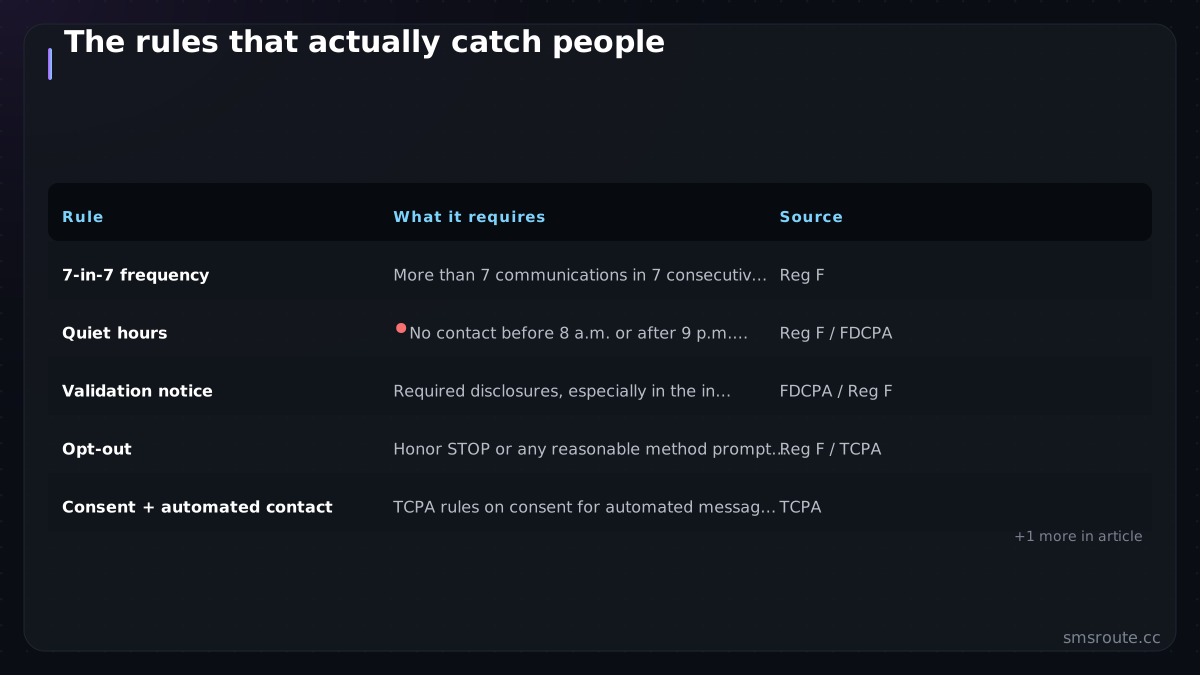
| Rule | What it requires | Source |
|---|---|---|
| 7-in-7 frequency | More than 7 communications in 7 consecutive days creates a rebuttable presumption of harassment | Reg F |
| Quiet hours | No contact before 8 a.m. or after 9 p.m. in the consumer's local time | Reg F / FDCPA |
| Validation notice | Required disclosures, especially in the initial communication, before collecting | FDCPA / Reg F |
| Opt-out | Honor STOP or any reasonable method promptly; suppress future contact | Reg F / TCPA |
| Consent + automated contact | TCPA rules on consent for automated messaging; statutory damages per violation | TCPA |
| Cease-and-desist | A consumer's cease request goes beyond a keyword opt-out and must be honored | FDCPA |
The two that surprise people: the 7-in-7 rule caps total communications tightly (harassment is presumed past it), and the local-time quiet-hours requirement means you must know each debtor's time zone — a 9:30 p.m. text to someone whose zone you guessed wrong is a violation. Automate both as hard constraints, not guidelines. Use area code lookup or IP geolocation to set time zones, but remember daylight saving time shifts can break automated rules if your system does not update for spring and fall changes.
Building a compliant collection flow
- Verify consent and identity firstConfirm you have a lawful basis to text this number and that it belongs to the right person. A number lookup helps flag reassigned numbers, which are a distinct TCPA liability in collections.
- Enforce quiet hours by local timeResolve each recipient's time zone and block sends outside 8 a.m.-9 p.m. local. Bake it into the send layer so no message can violate it, ever.
- Cap frequency automaticallyCount communications per consumer per rolling 7 days and stop before the 7-in-7 threshold. This is a per-recipient rate limit: the token-bucket pattern applied to compliance rather than fraud.
- Handle opt-out and cease broadlySTOP and plain-language opt-outs suppress immediately across all channels, per our opt-out handling. Treat any cease-and-desist as a full stop that goes beyond a marketing unsubscribe.
Log everything: consent, every message sent, every opt-out, with timestamps. In a collections dispute the burden of proof is on you — a timestamped log is what turns 'we sent a notice' into evidence. Each log entry should include phone number, timestamp, message content, consent source, and opt-out keyword. Retain these records for at least 3 years per FDCPA requirements.
Content and delivery, done right
- Keep messages professional and self-service — link to a secure payment portal (a branded short link, never a public shortener that carriers block) rather than demanding a callback.
- Two-way, not blast — collections texting works best as a conversation; enable inbound replies so consumers can ask questions and self-resolve.
- Mind delivery reliability — a message that silently fails still counts against your outreach window; monitor delivery receipts so you know what actually landed.
- Respect data sensitivity — debt data is sensitive; minimise what you store and where, the data-minimisation discipline that also reduces breach exposure.
SMSRoute is a no-KYC SMS API with crypto billing (BTC, ETH, USDT, XMR, LTC, and SOL) — the delivery layer beneath a compliant collection flow, not the compliance engine itself. The quiet-hours logic, frequency caps, consent records, and cease handling are yours to build and own; we deliver the messages reliably once your rules have cleared them. Done right, SMS is genuinely one of the most effective collection channels there is. Done carelessly, it is a $500-per-text liability generator running unattended — the difference is entirely in the rules above.
SMSRoute's published route pages list delivery from $0.004/message (premium direct-carrier corridors up to $0.035) with sub-100ms median submission and ~98.6% delivered success (smsroute.cc route pages, 2026).
FAQ
Is it legal to text someone about a debt?
What is the 7-in-7 rule for debt collection texts?
What hours can debt collectors send texts?
How must debt collectors handle opt-outs by text?
Send your first SMS in 5 minutes
No KYC. Pay with BTC, ETH, USDT, XMR, LTC, and SOL. Live routes to 149 countries.
Get an API key →