Beyond the reminder: scheduling as a conversation
How does two-way SMS scheduling turn reminders into conversations?
Two-way SMS scheduling transforms static reminders into interactive conversations. Customers can book, reschedule, or cancel appointments directly by replying to your SMS. This eliminates phone tag and web forms, making scheduling feel natural and immediate. With SMSRoute's no-KYC API and crypto billing, you can deploy this conversational flow in minutes across 149 countries.
Two-way SMS scheduling is the upgrade most businesses miss. They already send appointment reminders by SMS. Those work, cutting no-shows. But a one-way reminder only *tells*; it can't *act*. Two-way scheduling goes further: the customer replies to confirm, reschedule, or cancel, and the system acts on it, updating the calendar, offering new slots, freeing the cancelled time. That turns a notification into a scheduling conversation, and it cuts no-shows further than reminders alone, because a customer who can reschedule with one text does that instead of simply not showing up. When rescheduling is as easy as replying 'R', people reschedule rather than ghost.
This is the two-way SMS pattern applied to scheduling. It's a real conversation flow, not a broadcast. Here's how to design it.
What two-way scheduling handles
What types of scheduling actions can customers perform via SMS?
Customers can book new appointments, reschedule existing ones, confirm availability, and cancel bookings, all by texting your number. The system handles timezone-aware slots, waitlist management, and multi-step confirmations. SMSRoute's adaptive routing ensures reliable delivery and real-time DLR webhooks keep your system synced, even for complex scheduling logic.
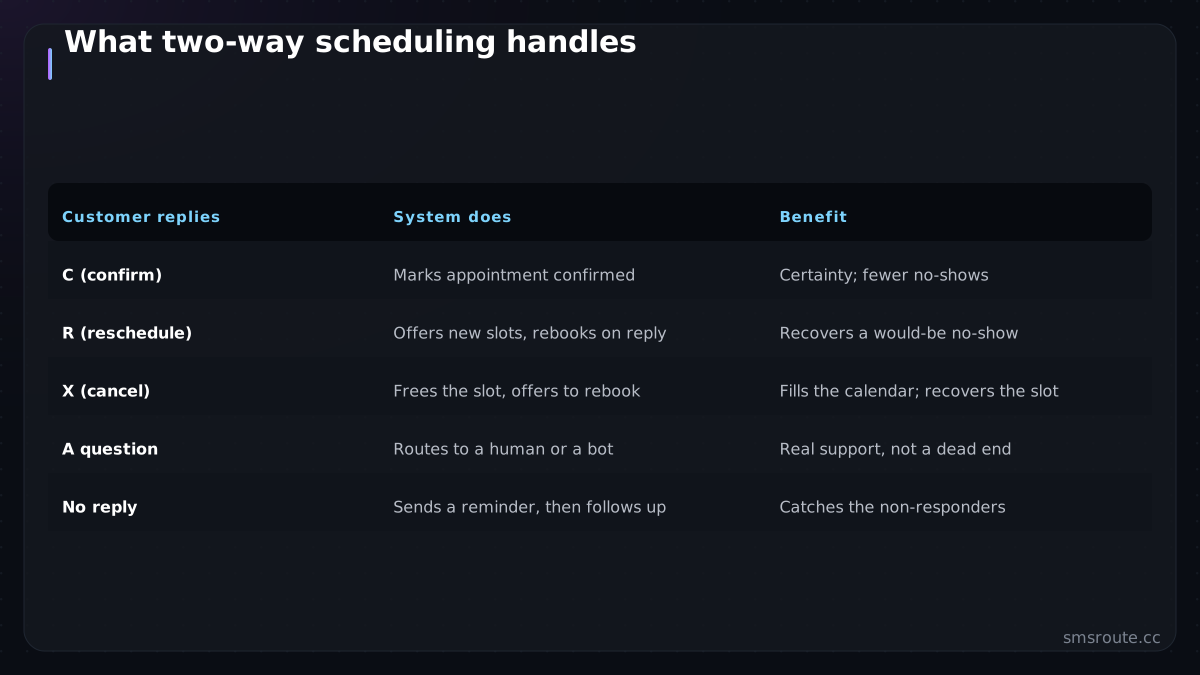
| Customer replies | System does | Benefit |
|---|---|---|
| C (confirm) | Marks appointment confirmed | Certainty; fewer no-shows |
| R (reschedule) | Offers new slots, rebooks on reply | Recovers a would-be no-show |
| X (cancel) | Frees the slot, offers to rebook | Fills the calendar; recovers the slot |
| A question | Routes to a human or a bot | Real support, not a dead end |
| No reply | Sends a reminder, then follows up | Catches the non-responders |
The reschedule path is where the real value is. A one-way reminder to someone who can't make it produces a no-show — they got the reminder, they still can't come, and there's no easy path to change it. A two-way flow turns that same moment into a rebooking: 'Reply R to reschedule' → offer slots → confirm the new time. You've recovered an appointment and freed the original slot for someone else, both from a single reply.
Designing the scheduling flow
How do you design an effective two-way SMS scheduling flow?
Start with a clear keyword trigger (e.g., 'BOOK' or 'RESCHEDULE'), then guide users through numbered options for date, time, and confirmation. Keep replies short and use smart sender IDs for brand recognition. SMSRoute's REST API and SMPP binds let you integrate this flow with any CRM or calendar system, with free test credits to validate before launch.
- Model it as a state machineConfirm/reschedule/cancel are states and transitions — the conversation-flow design applied to scheduling. Track where each appointment conversation is, keyed on the customer's number.
- Handle the reschedule sub-flowRescheduling is multi-step: offer available slots, accept a choice, confirm the new time, update the calendar. Present slots simply ('Reply 1, 2, or 3') and handle an unexpected reply with a re-prompt.
- Sync with the calendarThe flow's actions must update your actual booking system — confirm sets a status, reschedule moves the event, cancel frees the slot. Without calendar sync, the SMS conversation and reality diverge.
- Time reminders and follow-upsSend confirmations well ahead and reminders 24h/1h before, all in the customer's local time via scheduling. A no-reply gets a nudge; a confirmed appointment gets a reminder, not another confirm request.
Always honor STOP and HELP globally, even mid-scheduling-conversation — they override the flow, a compliance requirement. And keep the reply options dead simple: single letters or numbers, because a customer replying from a phone won't type a paragraph, and every extra step loses people.
Building it
How do you build a two-way SMS scheduling system?
Use SMSRoute's REST API to receive inbound messages and send replies. Map keywords to your scheduling logic, handle timezone conversion, and send confirmation texts with DLR tracking. Code examples in Python, PHP, Go, and Node are available on GitHub. With crypto billing and no KYC, you can go from signup to live scheduling in under an hour.
Mechanically, two-way scheduling is inbound handling plus state plus calendar integration: reminders and slot offers go out via scheduled sends, replies arrive on your inbound webhook (handle them idempotently), a state machine decides the next action, and each action updates your booking system. Scheduling platforms build this; a custom flow runs on two-way SMS plus your calendar's API. Consent is simpler here than for marketing — appointment scheduling is transactional (the customer booked, the texts serve that booking) — but you still honor opt-outs. According to the FCC's TCPA guidelines, transactional messages do not require prior express written consent, but opt-out requests must be honored. According to the FCC's TCPA guidelines, "prior express written consent is required for autodialed or prerecorded telemarketing calls to wireless numbers." See 47 CFR 64.1200(a)(2).
SMSRoute is a no-KYC SMS API with crypto billing (BTC, ETH, USDT, XMR, LTC, and SOL) providing the two-way delivery — outbound reminders and slot offers, inbound replies via webhook; the scheduling logic and calendar sync live in your application. The upgrade from one-way reminders to two-way scheduling is real and measurable: every customer who reschedules by reply instead of no-showing is a recovered appointment and a freed slot. Model the conversation as a state machine, keep the replies simple, sync with the calendar, and STOP-honor globally — and SMS becomes not just a reminder but the easiest way your customers manage their appointments, which is exactly what cuts no-shows the most. SMSRoute's published route pages list delivery from $0.004/message (premium direct-carrier corridors up to $0.035) with sub-100ms median submission and ~98.6% delivered success (smsroute.cc route pages, 2026).
Related reading
FAQ
How is two-way SMS scheduling different from appointment reminders?
How does SMS reduce appointment no-shows?
How do I build an SMS appointment scheduling flow?
Do appointment scheduling texts need marketing consent?
Send your first SMS in 5 minutes
No KYC. Pay with BTC, ETH, USDT, XMR, LTC, and SOL. Live routes to 149 countries.
Get an API key →