A text touches more places than you think
How many systems does an SMS pass through before delivery?
An SMS typically passes through the sender's API, aggregator routing, carrier gateways, and the recipient's mobile network. SMSRoute minimizes exposure by processing messages only in our secure data centers and forwarding directly to local carriers, reducing intermediate hops and keeping your data under your control.
SMS data residency is a question most senders never ask until a compliance review forces it. By then the contract is signed. Here's the reality. Between your API call and the handset, a message passes through your provider, maybe one or more sub-processors, and the destination carrier. Each may sit in a different country. Each may log some data. For most senders that's invisible plumbing. For a regulated buyer (under GDPR, a data-residency mandate, or a sector rule), where that data rests and who can legally access it has real consequences.
This guide covers what to ask and how to think about it, because 'the message got delivered' says nothing about which jurisdictions saw the number and content on the way.
What actually gets processed, and where
What message data is processed and where does it stay?
Only the message content, sender ID, and recipient number are processed. SMSRoute processes this data in our own infrastructure across multiple regions, never storing message content after delivery. We offer configurable data residency options so regulated buyers can keep processing within preferred jurisdictions.
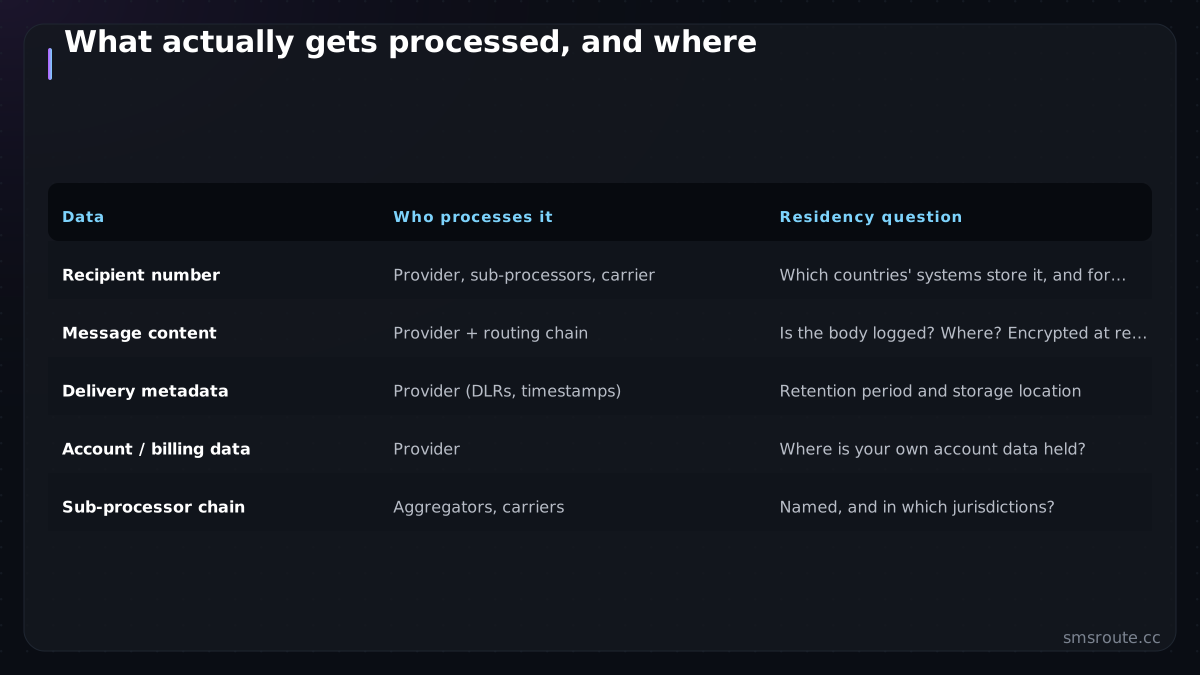
| Data | Who processes it | Residency question |
|---|---|---|
| Recipient number | Provider, sub-processors, carrier | Which countries' systems store it, and for how long? |
| Message content | Provider + routing chain | Is the body logged? Where? Encrypted at rest? |
| Delivery metadata | Provider (DLRs, timestamps) | Retention period and storage location |
| Account / billing data | Provider | Where is your own account data held? |
| Sub-processor chain | Aggregators, carriers | Named, and in which jurisdictions? |
The phone number and message content are personal data under GDPR (a point our GDPR OTP guide establishes), so every hop that stores them is a processing location that matters. The sub-processor chain is the part buyers most often miss: your direct provider may be in-region, but if it routes through an aggregator in another jurisdiction, your data went there too. For example, the FCC's rules on CPNI require carriers to protect customer proprietary network information, and GSMA guidelines provide best practices for SMS routing and data handling. These rules require carriers to store SMS metadata like call records within the U.S. or approved jurisdictions, while GSMA guidelines restrict cross-border routing of message content to prevent foreign data access.
What regulated buyers should ask
What should regulated buyers ask about SMS data residency?
Regulated buyers should ask: Where is message data processed and stored? Is content retained after delivery? Can processing be restricted to specific regions? SMSRoute answers all three: we process in your chosen region, delete content post-delivery, and support geo-restricted routing for compliance without sacrificing delivery speed.
- Where is message data stored, and for how long?Numbers, content, and delivery logs — the physical/legal location and retention period of each. Most mandates want shorter retention and in-region storage.
- Who are the sub-processors, and where?A named sub-processor list with jurisdictions. 'We use partners' is not an answer; a data-residency review needs the actual chain.
- Will they sign a DPA?A Data Processing Agreement naming you as controller and them as processor, with the residency and sub-processor commitments in writing. If they won't, that's your answer.
- Is content logged at all?The strongest residency posture is not storing message bodies beyond delivery. Data that isn't retained can't reside anywhere or leak — which is why minimization is the real fix.
How minimization sidesteps the hard part
How does data minimization simplify SMS compliance?
Data minimization means processing only essential fields—message, sender, recipient—and discarding content immediately after delivery. SMSRoute's architecture follows this principle by default, so you avoid storing sensitive data altogether. This sidesteps complex residency debates because there's nothing left to regulate once the message is delivered.
SMSRoute is a no-KYC SMS API with crypto billing (BTC, ETH, USDT, XMR, LTC, and SOL), and two design choices intersect with residency here. No-KYC onboarding means we never collect the business-identity documents that would otherwise be one more sensitive dataset to locate and protect. And crypto billing removes stored payment identity — one fewer category of personal data with a residency question attached. We're the delivery layer; for a formal data-residency requirement, ask the questions above, get the answers in a DPA, and lean on minimization to shrink what has to be answered in the first place. The honest architecture is to hold as little as the job allows, wherever it's held. SMSRoute's published route pages list delivery from $0.004/message (premium direct-carrier corridors up to $0.035) with sub-100ms median submission and ~98.6% delivered success (smsroute.cc route pages, 2026).
Related reading
FAQ
What is SMS data residency?
Why does message data location matter for compliance?
What should I ask an SMS provider about data residency?
How does data minimization help with residency?
Send your first SMS in 5 minutes
No KYC. Pay with BTC, ETH, USDT, XMR, LTC, and SOL. Live routes to 149 countries.
Get an API key →