The one rule that shapes Nigerian SMS: DND
To use an SMS API in Nigeria effectively, understand one thing first: the Do-Not-Disturb registry. Over 100 million Nigerian numbers are on the NCC's DND list, per the regulator (NCC, 2026). Subscribers join by texting STOP to the 2442 shortcode. Whether your message reaches them depends entirely on your sender-ID bind type. This single fact shapes everything. Pick the wrong setup and your promotional SMS is invisible to the majority of the market. For example, a promotional SMS sent to a number registered on the DND list without a Corporate Bind is silently dropped at the carrier level, no bounce, no error code.
Here are the rules (sender IDs, the DND binds, timing, and consent) and how they decide your delivery. SMSRoute's published route page for Nigeria lists direct-carrier delivery via MTN, Airtel, Glo from $0.016/message, with 115ms median submission and 97.0% delivered success (smsroute.cc route pages, 2026).
Corporate Bind vs Open Bind
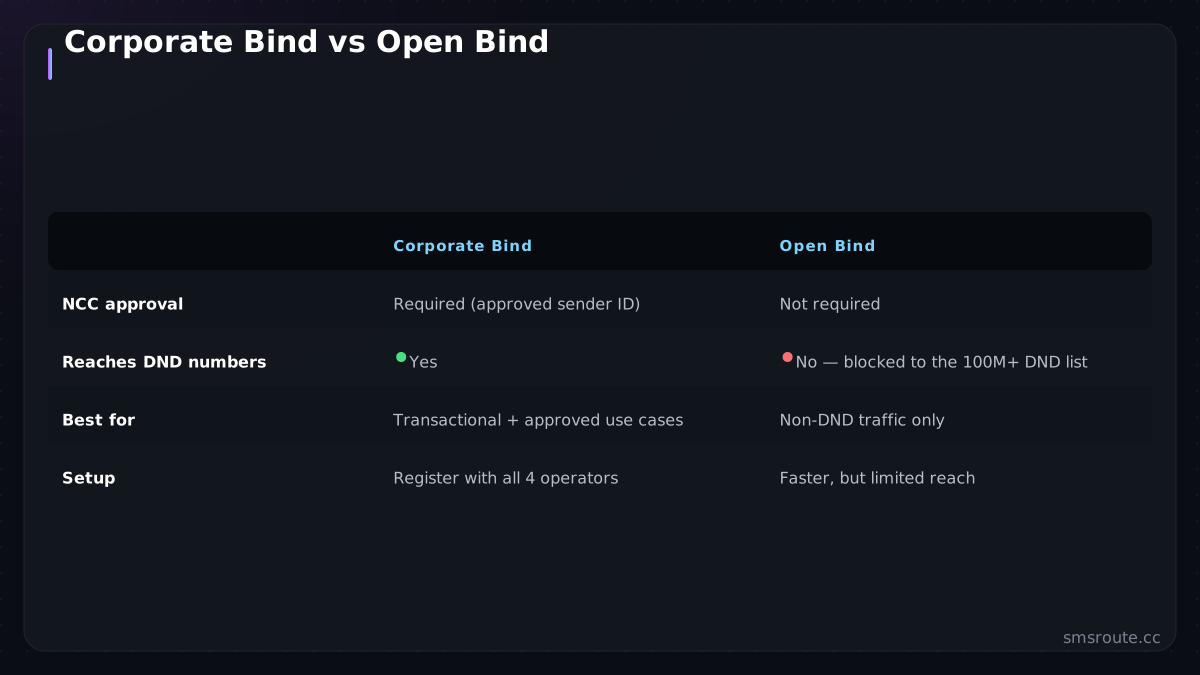
The NCC allows two sender-ID types, and the distinction is the whole game in Nigeria. It determines whether you can reach DND-registered numbers at all.
| Corporate Bind | Open Bind | |
|---|---|---|
| NCC approval | Required (approved sender ID) | Not required |
| Reaches DND numbers | Yes | No — blocked to the 100M+ DND list |
| Best for | Transactional + approved use cases | Non-DND traffic only |
| Setup | Register with all 4 operators | Faster, but limited reach |
A Corporate Bind is an NCC-approved sender ID that can deliver to DND numbers; an Open Bind needs no approval but cannot reach the DND list. Since over 100 million numbers are on DND, an Open Bind cuts your reachable audience dramatically. Sender-ID registration requires approval from all four major operators (MTN, Glo, Airtel, and 9mobile) with a maximum 11-character alphanumeric ID and a typical 3-5 business day approval. If reaching the full market matters, the Corporate Bind registration is not optional.
Timing, consent, and the transactional advantage
- Promotional SMS: 8am-8pm WAT only — marketing messages are restricted to daytime hours in West Africa Time. Enforce it in your scheduling by recipient local time.
- Promotional SMS needs explicit consent — and it's subject to DND filtering. No consent plus DND means no delivery.
- Transactional SMS is different — OTPs, bank alerts, and critical notifications deliver 24/7, bypass DND filtering, and aren't time-restricted. This is a real advantage: OTP traffic reaches everyone, any hour.
- Fines are serious — non-compliance can reach ₦10 million or 2% of annual gross revenue, whichever is higher, plus potential criminal liability. Nigeria enforces.
Transactional messages (OTP, alerts) bypass DND, send 24/7, and reach the whole market. So if your traffic is OTP and notifications, Nigeria is straightforward. Promotional traffic is where the DND registry, Corporate Bind, time windows, and consent all bite.
Sending to Nigeria in practice
- Identify your traffic typeTransactional (OTP, alerts) bypasses DND and sends 24/7 — the easy path. Promotional needs a Corporate Bind, consent, and daytime windows.
- Register a Corporate Bind sender ID if sending promoGet NCC approval across all four operators (MTN, Glo, Airtel, 9mobile), 11-char max, ~3-5 days, so you can reach DND numbers.
- Use quality direct routesNigerian route quality varies sharply by network; a grey route gets filtered. Test delivery to SIMs on each of the four networks — the seed-SIM method.
- Validate numbers firstHLR-validate to strip invalid numbers before paying to send — Nigerian rates vary by network so waste adds up.
SMSRoute is a no-KYC SMS API with crypto billing (BTC, ETH, USDT, XMR, LTC, and SOL) serving the international route to Nigeria across all four operators, with live pricing on the send SMS to Nigeria page. For OTP and transactional traffic — which bypasses DND and sends 24/7 — that's
Related reading
FAQ
How does the Do-Not-Disturb registry affect SMS in Nigeria?
What's the difference between Corporate Bind and Open Bind in Nigeria?
What are the rules for promotional SMS in Nigeria?
How do I register a sender ID in Nigeria?
Send your first SMS in 5 minutes
No KYC. Pay with BTC, ETH, USDT, XMR, LTC, and SOL. Live routes to 149 countries.
Get an API key →