Japan: numeric senders, layered consent
An SMS API in Japan works differently from most markets in two ways. First, Japan supports numeric sender IDs by default. Your traffic comes from numbers, and you identify yourself in the message body for maximum clarity. Second, consent is layered. Japan's data-protection framework governs that consent layer (APPI, 2026). Three separate laws all require opt-in for commercial SMS. The Anti-Spam Act mandates opt-in for marketing. The APPI (amended April 2024) governs personal data. And the Act on Specified Commercial Transactions adds its rules. All three enforce opt-in before you send. The 2026 APPI update introduced a stricter requirement for opt-in consent, mandating that SMS senders obtain explicit, prior agreement for each specific purpose of message delivery.
Here's how Japan's four-carrier market and layered consent work, and how to send compliantly.
SMSRoute's published route page for Japan lists direct-carrier delivery via NTT Docomo, KDDI, SoftBank from $0.065/message, with 94ms median submission and 98.9% delivered success (smsroute.cc route pages, 2026).
The Japanese market and its laws
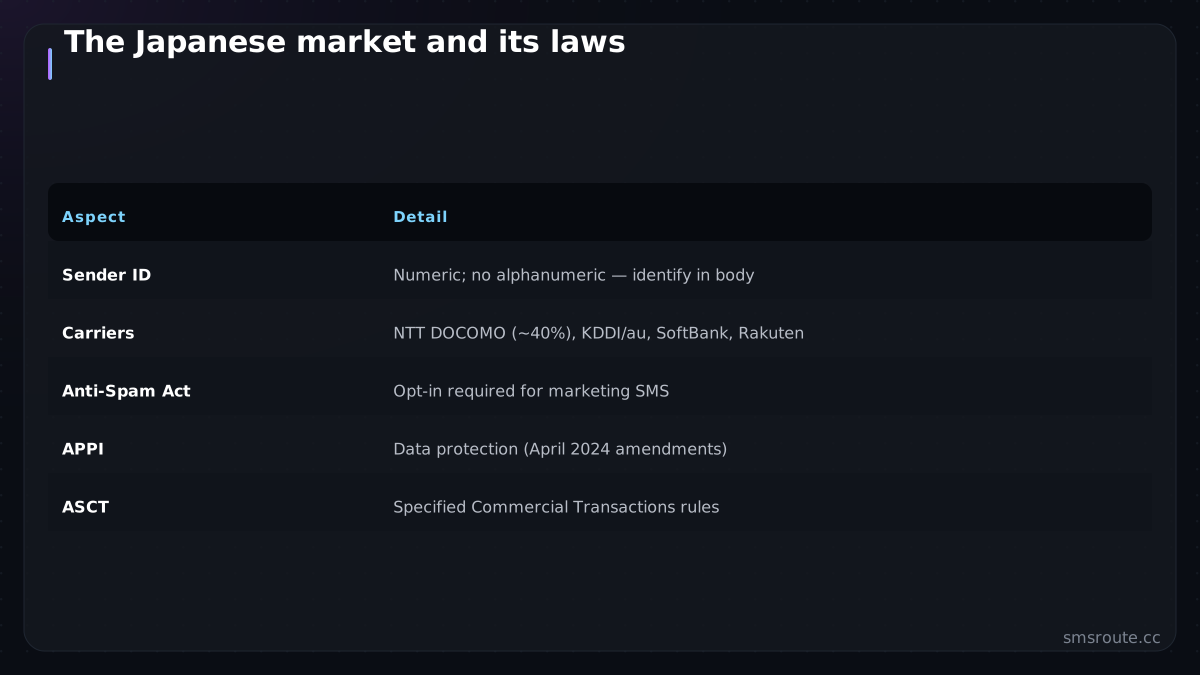
| Aspect | Detail |
|---|---|
| Sender ID | Numeric; no alphanumeric — identify in body |
| Carriers | NTT DOCOMO (~40%), KDDI/au, SoftBank, Rakuten |
| Anti-Spam Act | Opt-in required for marketing SMS |
| APPI | Data protection (April 2024 amendments) |
| ASCT | Specified Commercial Transactions rules |
The numeric-sender structure means you can't show a branded name. So, like the US, you put your identity in the message body. Japan's market splits across four carriers (NTT DOCOMO leading around 40%, then KDDI/au, SoftBank, and Rakuten Mobile), and delivery quality can vary by carrier. On consent, three laws stack: the Anti-Spam Act mandates opt-in for marketing, APPI governs personal data (with April 2024 amendments tightening it), and the ASCT adds commercial-transaction rules. All three enforce strict opt-in, so consent in Japan is non-negotiable and required by multiple laws. For more details on the Anti-Spam Act, see the Japanese government's official text.
Sending compliantly in Japan
- Get opt-in consentMarketing SMS requires opt-in under the Anti-Spam Act, with APPI and ASCT reinforcing it. Document consent thoroughly. Three laws mean three reasons to have records.
- Identify yourself in the message bodyWith numeric senders and no alphanumeric IDs, your brand name goes in the body. Use the OTP copy pattern of naming yourself in the text.
- Comply with APPI for dataHandle personal data under APPI, including its 2024 amendments. This mirrors GDPR-style data-minimisation obligations. The PPC's APPI guidelines provide official guidance.
- Handle Japanese script as UnicodeJapanese content is UCS-2, so the segment limit is 70 characters. Plan copy around the encoding reality.
The no-alphanumeric-sender-ID point catches senders expecting a branded name. In Japan, as in the US, messages come from numbers. So brand recognition and identification must live in the message body
Sending to Japan in practice
SMSRoute is a no-KYC SMS API with crypto billing (BTC, ETH, USDT, XMR, LTC, and SOL) serving the international route to Japan, with live pricing on the send SMS to Japan page. For transactional and OTP traffic, the international route delivers to Japanese users across the major carriers. Japanese OTP content sends as Unicode (70-character segments), and you identify yourself in the body since there's no alphanumeric sender ID.
The honest framing: Japan is a high-value market with a simple technical setup. Numeric senders, no registration marathon. But the consent bar is high, set by three laws at once. For transactional and OTP resting on the relationship, delivery is straightforward. For marketing, get genuine opt-in under the Anti-Spam Act, comply with APPI on data, and identify yourself clearly in the body. Test delivery across the four carriers, since quality varies. Get the layered consent right and Japan (a large, engaged, high-trust market) delivers reliably. For how this market fits the wider picture, see the global SMS compliance map. For example, SoftBank often shows higher suc
Related reading
FAQ
Does Japan support alphanumeric sender IDs for SMS?
What consent is required for SMS marketing in Japan?
What is APPI in Japan?
How does Japanese script affect SMS in Japan?
Send your first SMS in 5 minutes
No KYC. Pay with BTC, ETH, USDT, XMR, LTC, and SOL. Live routes to 149 countries.
Get an API key →