Egypt's rules have real surprises
An SMS API in Egypt comes with rules that catch senders off guard. The NTRA (the National Telecommunications Regulatory Authority) regulates SMS, and its sender-ID rules are specific and a little counterintuitive (NTRA, 2026). Arabic-language sender IDs are forbidden. Special characters aren't allowed. Generic sender IDs like INFO, SMS, or NOTICE are prohibited. And every campaign must support HELP and STOP commands in both English and Arabic. So Egypt is an Arabic-speaking market where the sender ID can't be in Arabic, but the opt-out has to be bilingual.
Here's what NTRA requires: the sender-ID restrictions, the bilingual opt-out, the registration, and how to send there.
SMSRoute's published route page for Egypt lists direct-carrier delivery via Orange, Vodafone, Etisalat from $0.018/message, with 110ms median submission and 97.8% delivered success (smsroute.cc route pages, 2026).
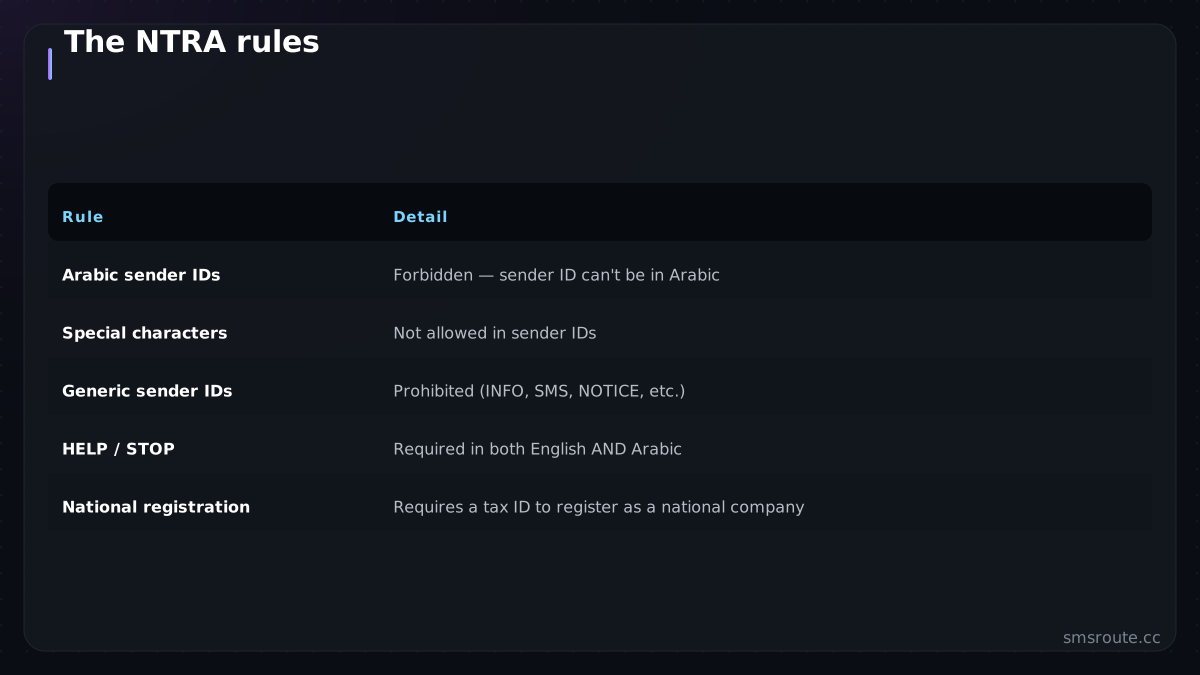
The NTRA rules
| Rule | Detail |
|---|---|
| Arabic sender IDs | Forbidden — sender ID can't be in Arabic |
| Special characters | Not allowed in sender IDs |
| Generic sender IDs | Prohibited (INFO, SMS, NOTICE, etc.) |
| HELP / STOP | Required in both English AND Arabic |
| National registration | Requires a tax ID to register as a national company |
The Arabic-sender-ID ban is the surprise. In a country where recipients read Arabic, NTRA rules forbid Arabic-language sender IDs and disallow special characters, so your sender ID is Latin-script and clean. Generic names are out too: INFO, SMS, NOTICE and similar are prohibited, so the sender ID must actually identify you. Yet the opt-out flips the language expectation: HELP and STOP must work in both English and Arabic, meeting Egyptian recipients in their language for the commands that matter. Registering as a national company requires a tax ID. For example, Egypt accepts the tax card number, while foreign companies typically cannot use a foreign tax ID and must register for a local one.
Sending compliantly
- Use a compliant sender IDLatin script, no Arabic, no special characters, not a generic name like INFO or SMS. It must identify your brand within those constraints.
- Support bilingual HELP and STOPHandle opt-out and help keywords in both English and Arabic. Egyptian recipients must be able to stop in their own language. Wire both, per the opt-out rules.
- Handle Arabic message bodies as UnicodeArabic content is UCS-2, so the segment limit drops to 70 characters. Plan copy around the encoding reality. The sender ID is Latin, but the body can be Arabic at Unicode cost.
- Register with a tax ID for national sendingNational-company registration requires a tax ID. Prepare it for the registration process, and get consent for marketing.
The language split is the thing to get right in Egypt: Latin-script sender ID (Arabic forbidden), but bilingual English-and-Arabic opt-out keywords, and Arabic message bodies billed as Unicode (70-char segments). Three different language rules in one market.
Sending to Egypt in practice
SMSRoute is a no-KYC SMS API with crypto billing (BTC, ETH, USDT, XMR, LTC, and SOL) serving the international route to Egypt, with live pricing on the send SMS to Egypt page. For transactional and OTP traffic, the route delivers to Egyptian users. Arabic OTP content sends as Unicode, so keep it within the 70-character segment limit, and use a compliant Latin-script sender or app name in the body.
The honest framing: NTRA sender-ID registration for branded sending is a domestic process needing a tax ID, so pair us for transactional with a registration path for branded campaigns. Whatever route you use, the Egyptian specifics are yours to respect — Latin sender ID, bilingual STOP/HELP, Unicode Arabic bodies. Get those three language rules right, register where needed, and Egypt delivers. For how this market fits the wider picture, see the global SMS compliance map.
Related reading
FAQ
Can I use an Arabic sender ID in Egypt?
What are Egypt's SMS opt-out requirements?
How does Arabic content affect SMS cost in Egypt?
What's required to register for SMS sending in Egypt?
Send your first SMS in 5 minutes
No KYC. Pay with BTC, ETH, USDT, XMR, LTC, and SOL. Live routes to 149 countries.
Get an API key →