CASL sets a high consent bar
An SMS API in Canada operates under CASL (Canada's Anti-Spam Legislation), one of the strictest anti-spam laws in the world. CASL applies to SMS, per the CRTC, and its core rule is demanding: you can't send a commercial text to a Canadian recipient without their consent, and the standard for express consent is high. It must be proactive. The recipient takes an action to opt in. Pre-checked boxes don't count, because consent can't be assumed. There are narrow implied-consent exceptions, but the default is a genuine, documented, opt-in. Miss it and CASL's penalties are severe: administrative monetary penalties reach CAD 1 million per violation for an individual and CAD 10 million for a business (CRTC, 2026). So Canada is a consent-first market where the consent has to be real.
Here's what CASL requires, the express-vs-implied distinction, and how to send commercial SMS in Canada legally.
SMSRoute's published route page for Canada lists direct-carrier delivery via Rogers, Bell, Telus from $0.015/message, with 89ms median submission and 98.9% delivered success (smsroute.cc route pages, 2026). For A2P (application-to-person) messaging, using a direct route via an aggregator can improve deliverability.
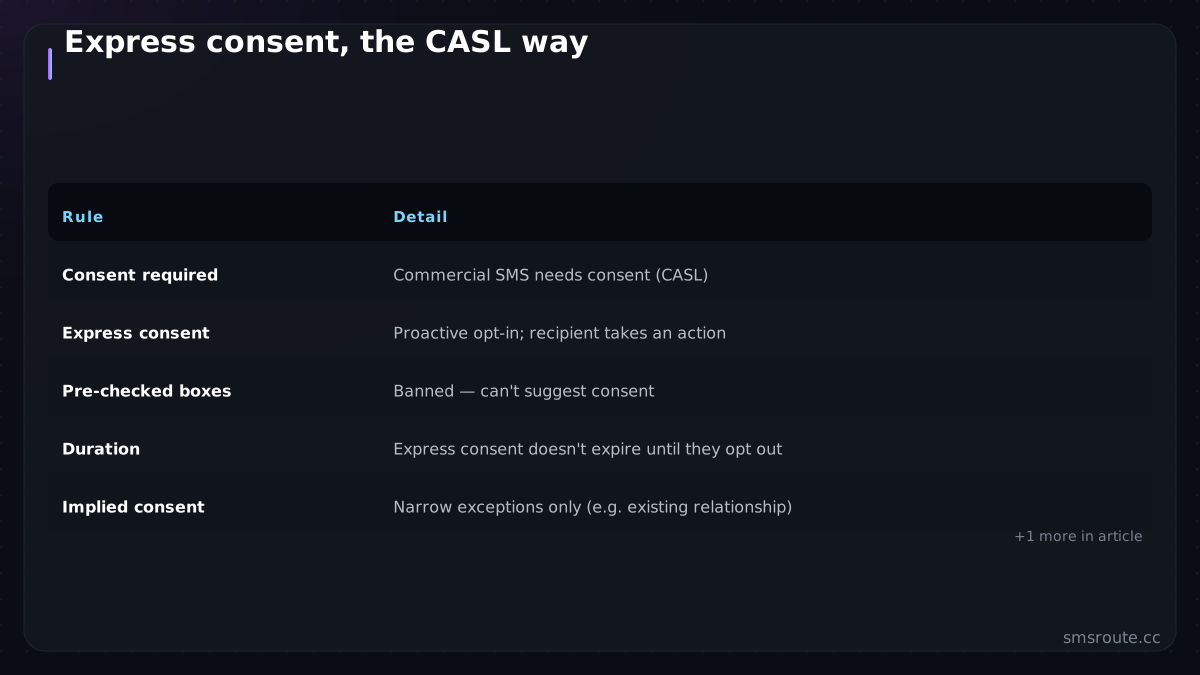
Express consent, the CASL way
| Rule | Detail |
|---|---|
| Consent required | Commercial SMS needs consent (CASL) |
| Express consent | Proactive opt-in; recipient takes an action |
| Pre-checked boxes | Banned — can't suggest consent |
| Duration | Express consent doesn't expire until they opt out |
| Implied consent | Narrow exceptions only (e.g. existing relationship) |
| Regulator | CRTC enforces; penalties are steep |
Express consent is the standard, and CASL is specific about it. The recipient must take a proactive action to opt in: signing up, checking an unticked box, texting a keyword. Pre-filled checkboxes are explicitly not allowed, per CRTC guidance, because they suggest rather than obtain consent. One upside: once you have valid express consent, it doesn't expire on a timer — you can send until the person opts out. Implied consent exists but only in narrow situations, like an existing business relationship, so don't rely on it as your default.
Sending compliantly in Canada
- Get proactive express consentAn unticked checkbox, a keyword opt-in, an explicit sign-up. The recipient acts to consent — never a pre-filled box. Use clear opt-in wording and log it.
- Document everythingRecord who consented, when, and how. CASL enforcement puts the burden of proof on the sender, so unprovable consent is treated as none.
- Provide clear identification and opt-outCommercial messages must identify the sender and offer a working unsubscribe. Honor opt-outs promptly.
- Distinguish transactional from commercialOTPs and transactional messages rest on the relationship; CASL's consent rules bite hardest on commercial marketing — the compliance distinction matters.
The pre-checked-box ban is the specific trap. Many senders assume a checkbox on a form is consent — but under CASL, a pre-filled or pre-checked box does not obtain valid express consent. The recipient must actively check it or take another proactive opt-in action. Design your forms so consent is an action, not a default.
Sending to Canada in practice
SMSRoute is a no-KYC SMS API with crypto billing (BTC, ETH, USDT, XMR, LTC, and SOL) serving the international route to Canada, with live pricing on the send SMS to Canada page. For transactional and OTP traffic — resting on the service relationship rather than CASL marketing consent — the route delivers to Canadian users reliably. Canada is a well-connected market where the discipline is consent, not routing exotica. When sending, ensure phone numbers are in international format (E.164) to avoid carrier filtering. Transactional messages include password resets or payment confirmations; promotional offers are commercial. This distinction determines whether CASL consent is required.
The honest framing: CASL express consent is your obligation to obtain and document, whatever provider you use; we deliver the messages your compliant process approves. For transactional and OTP, the relationship implies the basis. For commercial marketing, get proactive express consent (no pre-checked boxes), document it, and honor opt-outs. And note Canada is distinct from the US — CASL is stricter than TCPA, so US consent practices don't automatically satisfy it. Treat Canada as its own market, get the express consent right, and delivery is straightforward. For how this market fits the wider picture, see the global SMS compliance guide.
Related reading
FAQ
Does CASL apply to SMS in Canada?
Are pre-checked consent boxes allowed under CASL?
Does CASL consent expire?
Is Canada's SMS law the same as the US?
Send your first SMS in 5 minutes
No KYC. Pay with BTC, ETH, USDT, XMR, LTC, and SOL. Live routes to 149 countries.
Get an API key →