Bangladesh: masking or non-masking
An SMS API in Bangladesh starts with one choice: masking or non-masking. Masking SMS shows your brand name as the sender ID (like YOURSHOP) and requires BTRC approval for branded communication (BTRC, 2026). Non-masking SMS comes from a numeric sender instead. The Bangladesh Telecommunication Regulatory Commission (BTRC) governs both. To get a masking sender ID, you submit documents through a licensed SMS aggregator: registered company name, Trade License, TIN certificate, NID of the authorized person, and the desired Sender ID. Approval typically takes 3 to 5 business days. Common rejection reasons include mismatched business registration names or incomplete supporting documents.
Here's the masking-vs-non-masking split, what BTRC approval requires, and how to send Bangladeshi SMS. SMSRoute's published route page for Bangladesh lists wholesale routing via Grameenphone, Robi, Banglalink from $0.013/message, with 128ms median submission and 96.4% delivered success (smsroute.cc route pages, 2026).
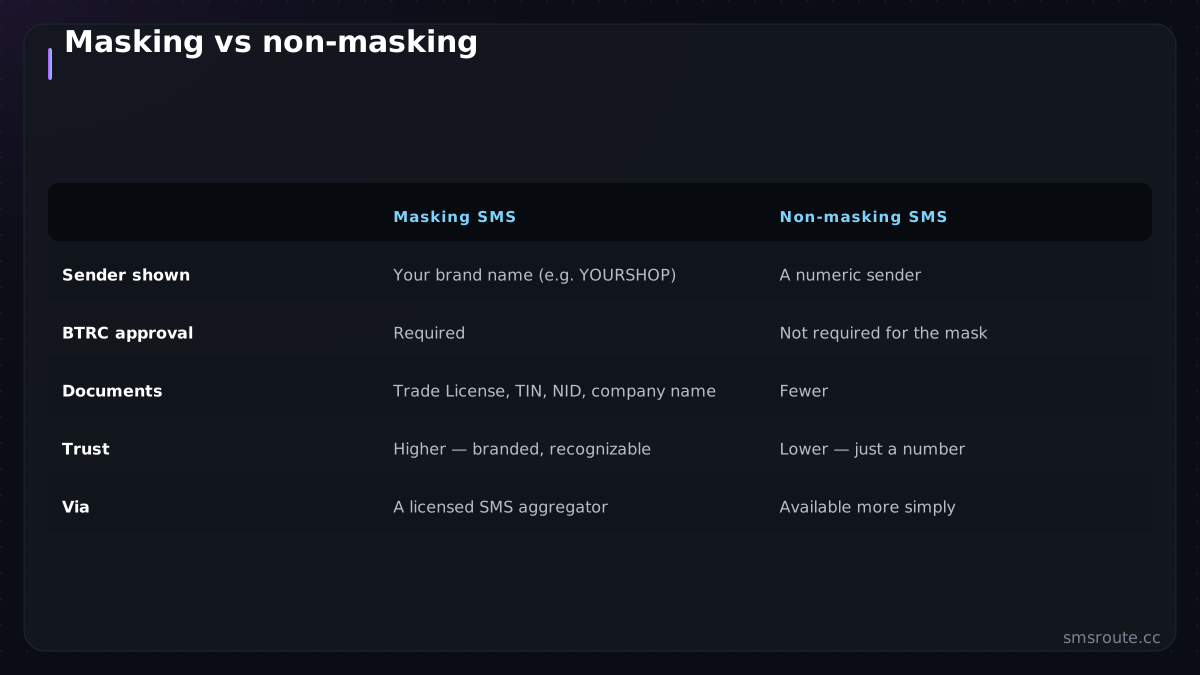
Masking vs non-masking
| Masking SMS | Non-masking SMS | |
|---|---|---|
| Sender shown | Your brand name (e.g. YOURSHOP) | A numeric sender |
| BTRC approval | Required | Not required for the mask |
| Documents | Trade License, TIN, NID, company name | Fewer |
| Trust | Higher (branded, recognizable) | Lower (just a number) |
| Via | A licensed SMS aggregator | Available more simply |
Masking gives you a branded sender ID (more trust, more recognition) but requires BTRC approval and a document submission through a licensed aggregator: registered company name, Trade License, TIN certificate, NID of the authorized person, and the desired Sender ID. Non-masking uses a numeric sender. It's simpler to start, but shows just a number. Many businesses use masking for branded and marketing traffic where recognition matters. They accept non-masking where a number suffices. For example, in Bangladesh, a numeric sender ID like 8801234567890 is used, requiring the country code prefix 880.
Sending compliantly in Bangladesh
- Decide masking vs non-maskingBranded marketing and trust-sensitive traffic → masking (BTRC-approved sender ID). Where a numeric sender suffices → non-masking, simpler to start.
- Prepare BTRC masking documentsFor masking, submit registered company name, Trade License, TIN certificate, NID of the authorized person, and desired Sender ID through a licensed aggregator.
- Get consent for marketingMarketing needs consent and opt-out; transactional traffic (OTP) rests on the relationship (the compliance basics apply).
- Handle Bangla script as UnicodeBangla message bodies use Unicode (UTF-8). When encoded as UCS-2, the segment limit is 70 characters (plan copy around the encoding reality).
Masking (branded) costs more and needs BTRC paperwork, but recognizable sender IDs earn more trust and engagement (important for marketing). Non-masking is cheaper and simpler but shows only a number.
Sending to Bangladesh in practice
For transactional and OTP traffic, the international route delivers to Bangladeshi users. Bangla OTP content sends as Unicode (70-character segments when using UCS-2), and you put your app name in the body for identification. A typical API call to send an SMS might look like this:
curl -X POST https://api.smsroute.cc/sms/send \
  -H "Authorization: Bearer YOUR_API_KEY" \
  -H "Content-Type: application/json" \
  -d '{
    "to": "+8801XXXXXXXXX",
    "from": "YourBrand",
    "message": "Your OTP is 123456"
  }'
The honest boundary: a BTRC-approved masking sender ID is a domestic registration process, done through a licensed aggregator with company documents. Pair transactional traffic with a registration path for branded campaigns. For how this market fits the wider picture, see the global SMS compliance map.
FAQ
What is the difference between masking and non-masking SMS in Bangladesh?
How do I get a masking sender ID in Bangladesh?
Who regulates SMS in Bangladesh?
Should I use masking or non-masking SMS?
Send your first SMS in 5 minutes
No KYC. Pay with BTC, ETH, USDT, XMR, LTC, and SOL. Live routes to 149 countries.
Get an API key →