Three number types, three very different deals
The numbers, side by side
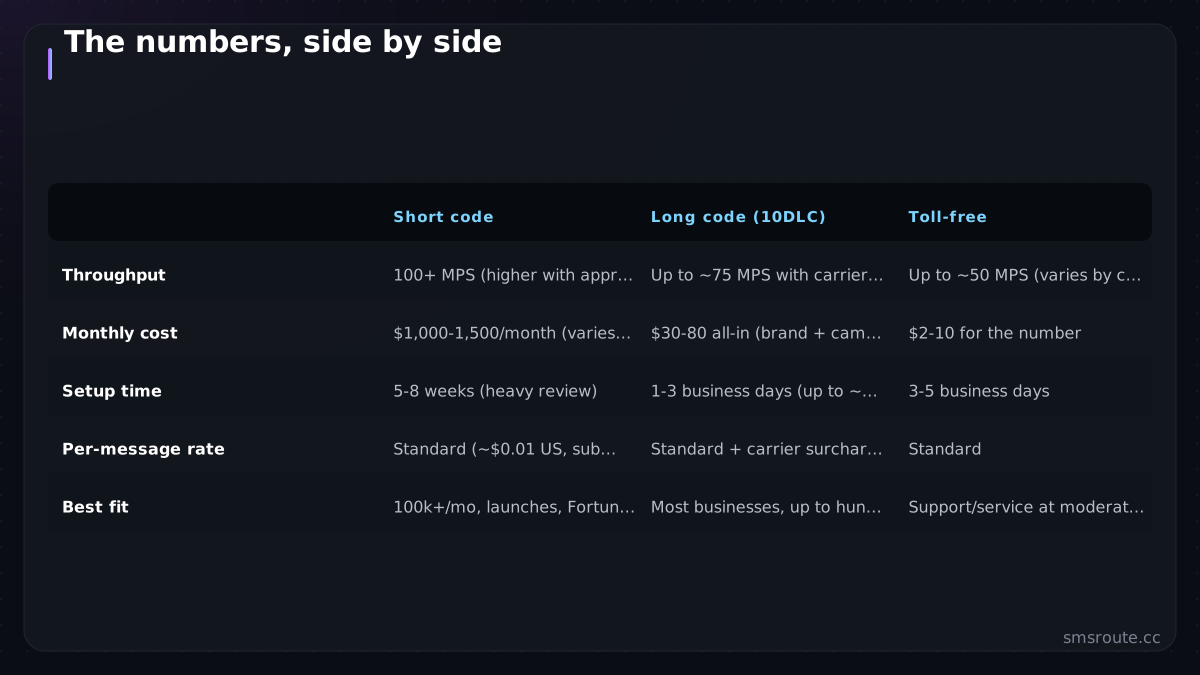
| Short code | Long code (10DLC) | Toll-free | |
|---|---|---|---|
| Throughput | 100+ MPS (higher with approval) | Up to ~75 MPS with carrier approval (varies by vetting) | Up to ~50 MPS (varies by carrier) |
| Monthly cost | $1,000-1,500/month (varies by provider and leasing terms) | $30-80 all-in (brand + campaign, per CTIA guidelines) | $2-10 for the number |
| Setup time | 5-8 weeks (heavy review) | 1-3 business days (up to ~2 weeks complex) | 3-5 business days |
| Per-message rate | Standard (~$0.0083 US, subject to carrier surcharges) | Standard + carrier surcharges | Standard |
| Best fit | 100k+/mo, launches, Fortune-500 scale | Most businesses, up to hundreds of thousands/mo | Support/service at moderate volume |
The cost gap is the headline: a short code runs $12,000-18,000 a year before messages, while 10DLC is under $1,000 a year all-in. That gap only makes sense above roughly 100,000 messages a month, where short-code throughput and deliverability earn it. Below that, the economics simply don't work. For a business sending 50,000 messages per month, 10DLC costs about $500 per year versus short code about $15,000 per year, a 30x difference.
Which one, by situation
- Most businesses → 10DLC (long code). Affordable, live in 1-3 days, locally identifiable, and enough throughput for volumes up to hundreds of thousands a month. It's the default right answer in 2026, and the fee stack is itemized in our carrier fees guide.
- High volume / big brand → short code. 100k+ messages a month, launch spikes, maximum throughput, and a $15k+ annual budget to match. Below that volume, skip it.
- Customer support / service → toll-free. A practical, faster middle ground than a short code for nationwide support messaging at moderate volume, with quick verification and low number cost.
- Two-way conversations → 10DLC or toll-free, never a short-code-only mindset. All support real inbound; match the two-way SMS capability to your reply volume.
One trap: teams reach for a short code because it sounds premium, then pay $18k/year to send 5,000 messages a month a 10DLC number would handle for under $1k. Volume drives this decision, not prestige. Start at 10DLC and graduate only when throughput actually forces it.
How this fits the bigger picture
Number type is a US-specific layer that stacks on top of the universal concerns. Whatever you pick still needs sender registration where required, still bills through the carrier surcharge stack, and still lives or dies by route quality and delivery monitoring. The number type sets your capacity and identity; it doesn't fix delivery, which is a separate discipline.
SMSRoute is a no-KYC SMS API with crypto billing (BTC, ETH, USDT, XMR, LTC, and SOL), and an honest scoping note: US short-code and 10DLC registration is a domestic-route regime with its own onboarding — the same domestic-vs-international trade we describe for India's DLT. For global OTP and transactional traffic over international routes, the number-type question mostly dissolves; for US-registered branded volume at scale, choose the number type by the table above and pair it with a registration-capable domestic setup.
Related on SMSRoute: for message-format edge cases, see MMS vs SMS: when to use which and flash SMS (class 0) explained.
SMSRoute's published route pages list delivery from $0.004/message (premium direct-carrier corridors up to $0.035) with sub-100ms median submission and ~98.6% delivered success (smsroute.cc route pages, 2026).
Related reading
FAQ
What's the difference between a short code, long code, and toll-free number?
Should I use a short code or 10DLC?
What is a toll-free number best for?
How long does each SMS number type take to set up?
Send your first SMS in 5 minutes
No KYC. Pay with BTC, ETH, USDT, XMR, LTC, and SOL. Live routes to 149 countries.
Get an API key →