First, be honest about what 'anonymous' means
You can send anonymous SMS online. But the word hides three meanings, and mixing them up is how people get burned. Anonymous to the *recipient*: they see a sender ID, not your phone. Anonymous to the *provider*: the service holds no identity for you. Anonymous to the *world* (untraceable by anyone, ever) is not real. Anyone who promises it is lying. Every SMS leaves a trail somewhere: a carrier, a log, a payment. For example, a carrier logs the sender’s IP address and timestamp, while a blockchain payment record permanently stores the transaction hash.
Usually it is the first meaning. You just want your personal number kept out of it. That is easy and fully legitimate.
Why free 'anonymous SMS' sites are mostly traps
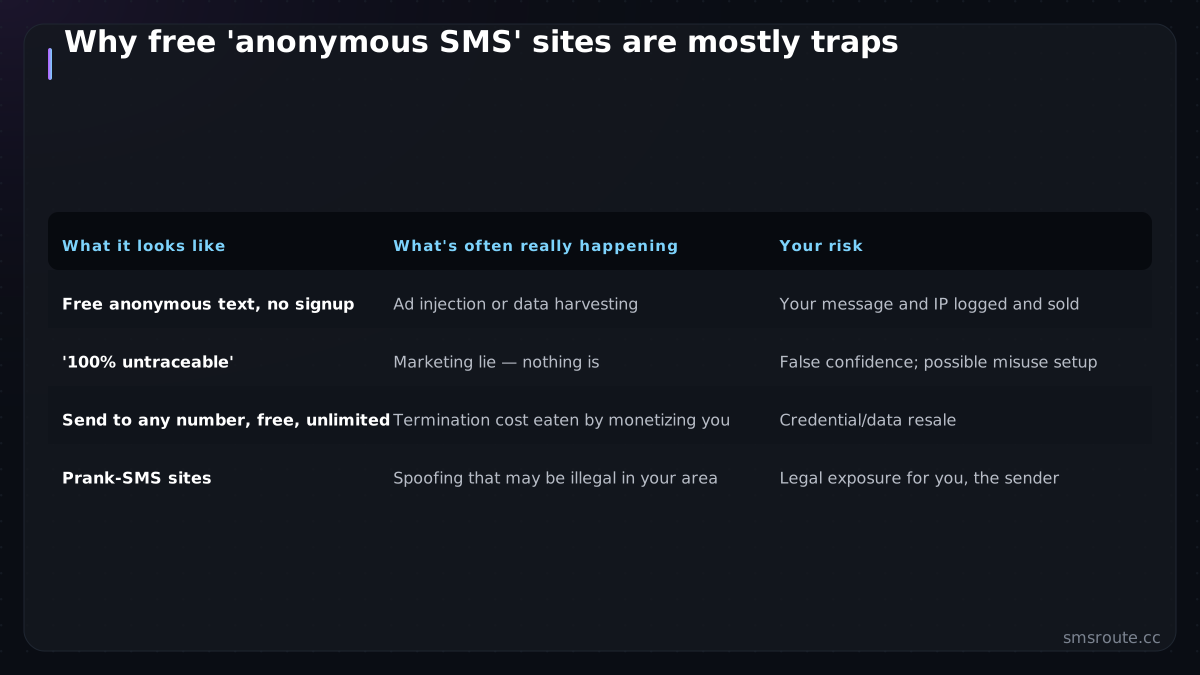
Search results overflow with free-anonymous-text websites. Treat them as hostile until proven otherwise. SMS delivery costs money at the carrier level. So a genuinely free service has to earn its keep another way. That way is usually your data, the recipient's data, or worse.
| What it looks like | What's often really happening | Your risk |
|---|---|---|
| Free anonymous text, no signup | Ad injection or data harvesting | Your message and IP logged and sold |
| '100% untraceable' | Marketing lie — nothing is | False confidence; possible misuse setup |
| Send to any number, free, unlimited | Termination cost eaten by monetizing you | Credential/data resale |
| Prank-SMS sites | Spoofing that may be illegal in your area | Legal exposure for you, the sender |
Sender-ID spoofing (faking someone else's number as the origin) is illegal in many jurisdictions and is exactly what a lot of 'anonymous prank' sites do. Anonymity (not showing *your* identity) is legal; impersonation (showing *someone else's*)
The lawful, legitimate use cases
- Not exposing your personal number in a business or classified-ad context — send from a service number instead. This is completely legitimate and the most common real need.
- Privacy-sensitive notifications where you don't want the recipient to reply to a personal line.
- Whistleblowing or support channels run responsibly, where the sender's identity is protected but the message is honest.
- Developer and business messaging at scale — here 'anonymous' really means 'from our service, billed privately', which is an API job, not a free-website job.
Those are illegal regardless of how you send them, and every legitimate provider (including us) cuts off traffic that crosses into them. For UK law, see Ofcom's guidance on caller ID spoofing.
The real route for anything beyond a one-off
- Use an API that doesn't require KYCNo documents at onboarding means the provider never holds them. SMSRoute is a no-KYC SMS API with crypto billing (BTC, ETH, USDT, XMR, LTC, and SOL). The fuller picture is in our anonymous SMS API guide.
- Fund with cryptoPay from a crypto balance so there is no card or bank identity tied to your traffic — the how-to is here.
- Send from a service sender, not your phoneRecipients see a sender ID or shared number, never your personal line — and you put your name in the body only if you want to be identified.
- Stay lawful by destinationConsent and content rules still apply wherever you send — the compliance checklist covers the main regimes. Anonymity is not an exemption from them.
Pick the real meaning you need, use a real tool, and stay on the lawful side of the line — the $5 signup credit lets you test the API route before committing anything. SMSRoute's published route pages list delivery from $0.004/message (premium direct-carrier corridors up to $0.035) with sub-100ms median submission and ~98.6% delivered success (smsroute.cc route pages, 2026).
FAQ
Can I send an anonymous SMS online for free?
Is sending anonymous SMS legal?
What does 'anonymous' actually mean for SMS?
How do I send anonymous SMS at scale?
Send your first SMS in 5 minutes
No KYC. Pay with BTC, ETH, USDT, XMR, LTC, and SOL. Live routes to 149 countries.
Get an API key →