What is actually different about a VoIP number
The VoIP vs non-VoIP numbers distinction is simple at the wire level: a non-VoIP number terminates on a SIM in a physical device on a mobile network. A VoIP number terminates on software like Google Voice, TextNow, or a SIP trunk. It is reachable from anywhere, creatable in bulk, and discardable in seconds. Carrier databases record which is which, so any platform can classify a submitted number in milliseconds via a lookup API (Twilio Lookup, Ekata, and NumVerify are the common ones) before a single SMS is sent.
That classification drives real divergence. According to Twilio's documentation on line type detection (Twilio, 2024), VoIP numbers are flagged as NONFIXED_VOIP and often blocked or subjected to additional verification. For real-SIM numbers, OTP delivery success typically exceeds 95% on direct carrier routes (SMSRoute route data, 2026).
Why platforms treat VoIP as a risk signal
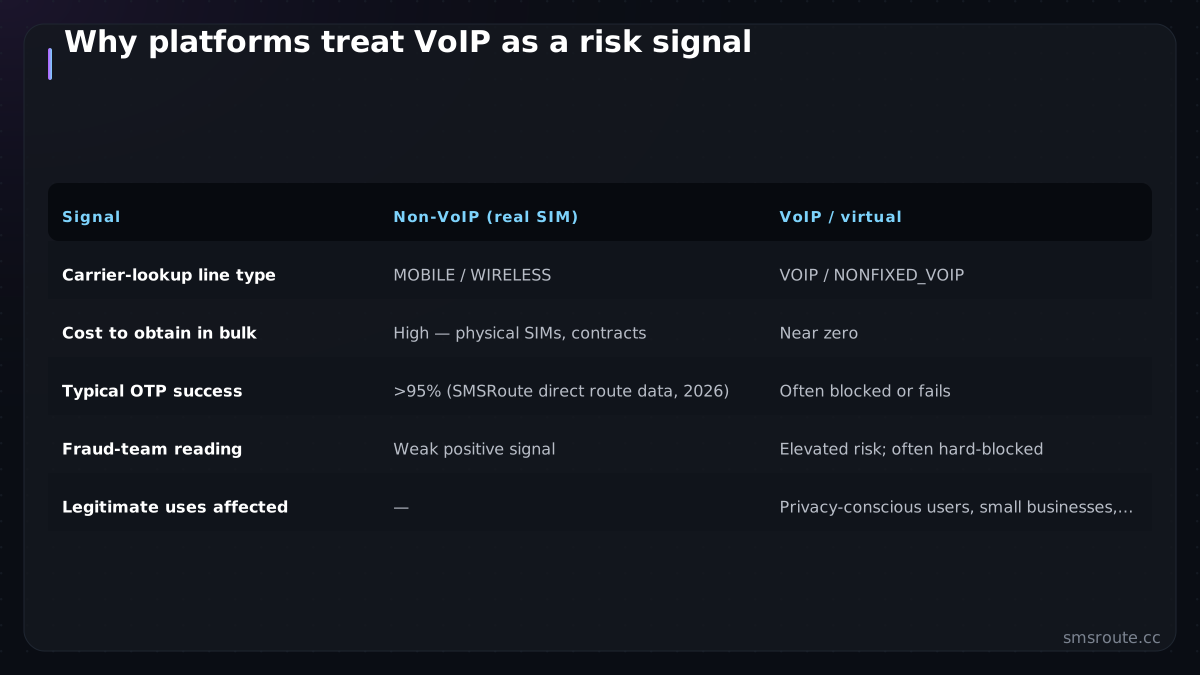
Nothing is wrong with VoIP as a technology. Businesses run on it. The problem is economics: a fraudster can generate hundreds of VoIP numbers for pennies, burn each after one signup, and repeat. Real SIMs cost money, need physical provisioning, and tie to carrier billing. So a VoIP number at *account creation* correlates with disposable identity in exactly the way fraud teams care about, and platforms from banking to social media have responded by screening for it.
| Signal | Non-VoIP (real SIM) | VoIP / virtual |
|---|---|---|
| Carrier-lookup line type | MOBILE / WIRELESS | VOIP / NONFIXED_VOIP |
| Cost to obtain in bulk | High — physical SIMs, contracts | Near zero |
| Typical OTP success | >95% (SMSRoute direct route data, 2026) | Often blocked or fails |
| Fraud-team reading | Weak positive signal | Elevated risk; often hard-blocked |
| Legitimate uses affected | — | Privacy-conscious users, small businesses, travelers |
The collateral damage in that last row is real: legitimate users on VoIP numbers get blocked alongside the fraud traffic the filter was built to stop.
What your own OTP flow should do
If you run signup verification, you are on the deciding side of this. Three workable policies exist in ascending strictness. Pick deliberately rather than inheriting a vendor default.
- Classify before sendingRun every submitted number through a lookup — line type, carrier, reachability — before the send fires. An HLR lookup does this per-number and doubles as your first defense against invalid and unallocated ranges.
- Policy A - allow, but watchAccept VoIP numbers, tag the account, and weight the tag in downstream risk scoring. Right for products where privacy-respecting users are core and fraud pressure is modest.
- Policy B - allow with frictionVoIP numbers trigger a second signal — email confirmation, small deposit, manual review. This is the middle path used by many consumer platforms.
- Policy C - block at intakeReject VOIP line types at the form with a clear message. Right for high-fraud verticals; combine with the rate-limit and geo controls from our SMS pumping guide, because pumping traffic loves virtual ranges.
curl -X POST https://smsroute.cc/api/v1/lookup \
  -H "Authorization: Bearer YOUR_API_KEY" \
  -H "Content-Type: application/json" \
  -d '{"to": "+1234567890"}'
Whichever policy you pick, the mechanics of the flow itself do not change: hashed codes with a short TTL, capped attempts, one resend then escalate — the defaults in our OTP best-practices guide. And every message you avoid sending to an unreachable or hostile number is direct savings; pre-send validation typically pays for itself, as the math in our international cost guide makes plain.
Where SMSRoute sits in this
SMSRoute is a no-KYC SMS API with crypto billing (BTC, ETH, USDT, XMR, LTC, and SOL) — we are the delivery and validation layer, not the policy layer. The HLR lookup service gives you the line-type classification to enforce whatever VoIP policy you choose, and delivery runs over direct carrier routes either way. One thing we will say plainly: if your interest in this topic is acquiring virtual numbers to defeat *other* platforms' verification, that is not a use case we serve. This page is for the teams building the defenses.
Related reading
FAQ
Why do services reject VoIP numbers for SMS verification?
How do platforms know a number is VoIP?
Should my app block VoIP numbers?
Does OTP delivery work worse to VoIP numbers?
Send your first SMS in 5 minutes
No KYC. Pay with BTC, ETH, USDT, XMR, LTC, and SOL. Live routes to 149 countries.
Get an API key →