Why feature tables lie
Why do feature tables for SMS APIs often mislead buyers?
Feature tables omit real-world delivery rates, hidden fees, and support quality. SMSRoute avoids this by offering transparent pricing from $0.004 per message, real-time DLR webhooks, and 24/7 support—so you test actual performance, not marketing claims.
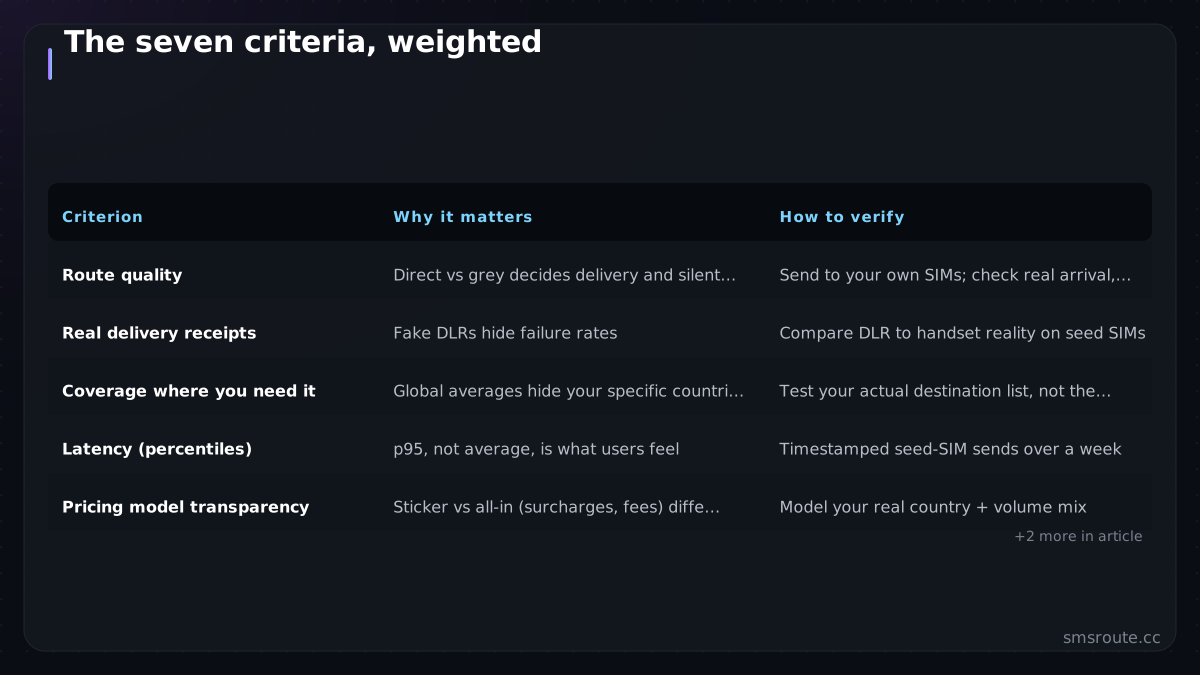
The seven criteria, weighted
What are the most important criteria for comparing international SMS APIs?
Key criteria include coverage (149 countries with SMSRoute), pricing honesty (from $0.004/msg), delivery reliability (99.9% uptime, auto-failover), no-KYC signup, crypto billing, DLR accuracy, and support responsiveness. SMSRoute excels in all, with free test credits to verify.
| Criterion | Why it matters | How to verify |
|---|---|---|
| Route quality | Direct vs grey decides delivery and silent failures | Send to your own SIMs; check real arrival, not just DLRs |
| Real delivery receipts | Fake DLRs hide failure rates | Compare DLR to handset reality on seed SIMs |
| Coverage where you need it | Global averages hide your specific countries | Test your actual destination list, not the marketing map |
| Latency (percentiles) | p95, not average, is what users feel | Timestamped seed-SIM sends over a week |
| Pricing model transparency | Sticker vs all-in (surcharges, fees) differ 40-60% | Model your real country + volume mix |
| Onboarding friction | KYC and verification lead time | Time from signup to first real send |
| Support + reliability | Route issues need a responsive provider | Test support response before you depend on it |
Weight these by your situation. An OTP product weights latency and route quality highest; a marketing sender weights pricing and coverage; a privacy-focused team weights onboarding and billing. There's no universal ranking — the right provider is the one that wins on *your* weighted criteria, which is why a generic 'best' list can't answer the question for you.
The test that beats any spec sheet
What test can you run to verify an SMS API's real performance?
Send a test message to multiple countries using free credits. SMSRoute provides free test credits on signup, real-time DLR webhooks, and adaptive multi-route delivery—so you see actual delivery rates and speed, not just promises.
- Build a seed panelPrepaid SIMs on the major networks in your top 3-5 destination countries, in real handsets. A few dollars, and it's the only way to see route quality and silent filtering.
- Send production-shaped trafficYour real message template, real cadence, timestamped, over a week. The full method is in our delivery benchmark and latency guides.
- Reconcile three numbersSent, DLR-delivered, and actually-on-handset. The DLR-vs-handset gap exposes fake receipts; the sent-vs-DLR gap is the honest delivery rate.
- Score per criterion, then weightTurn observations into a weighted score against the seven criteria. Now you have a comparison grounded in your traffic, not a vendor's marketing.
The single most revealing test: run the same seed-SIM traffic through two providers simultaneously for a week. The delivery, latency, and DLR-honesty differences are stark and impossible to fake — far more decisive than any feature table.
Reading the pricing dimension honestly
How should you honestly evaluate SMS API pricing across countries?
Look beyond headline rates to per-country costs. SMSRoute offers transparent pricing from $0.004 per message, with a range of $0.009 to $0.035 for expensive routes like AU/JP. No hidden fees, and unused balance is refundable to your crypto wallet.
Pricing deserves special care. It's the most gamed criterion. A low headline rate can hide US carrier surcharges and 10DLC fees that add 40-60%, per independent pricing audits. A suspiciously low international rate often signals grey-route termination that filters silently. So model all-in cost for your real country mix — the logic in our international cost guide — not the cheapest number on the page. Cheapest-per-message and cheapest-per-*delivered*-message are frequently different providers. For authoritative guidance on carrier surcharges, see the FCC's 10DLC information page.
SMSRoute is a no-KYC SMS API with crypto billing (BTC, ETH, USDT, XMR, LTC, and SOL), and we'd rather be evaluated on this methodology than on a claim. Our pitch against these criteria is specific. Direct routes with auditable handset DLRs. Live per-country pricing on every destination page. Minutes-to-first-message onboarding. And a $5 credit that exists precisely so you can run the seed-SIM test above before committing. SMSRoute's published route pages list delivery from $0.004/message (premium direct-carrier corridors up to $0.035) with sub-100ms median submission and ~98.6% delivered success (smsroute.cc route pages, 2026).
Related on SMSRoute: for head-to-head vendor breakdowns see SMSRoute vs Sinch and SMSRoute vs Telnyx, and for the buyer's-eye framing the business SMS decision guide.
Related reading
FAQ
How do I compare international SMS API providers?
What's the most important factor in choosing an SMS API?
How can I test an SMS provider's delivery quality?
Why not just pick the cheapest SMS API?
Send your first SMS in 5 minutes
No KYC. Pay with BTC, ETH, USDT, XMR, LTC, and SOL. Live routes to 149 countries.
Get an API key →