What a grey route actually is
Grey route SMS is business messaging that reaches phones through channels the destination carrier never sanctioned for commercial traffic — most commonly SIM farms pumping A2P messages through consumer SIM contracts, or exploitable international interconnects meant for person-to-person traffic. It is called grey rather than black because the message itself may be perfectly legitimate; what is illegitimate is the path, which dodges the carrier's A2P termination fees. The economics are the whole story: skip the fee, undercut the market, pocket the spread.
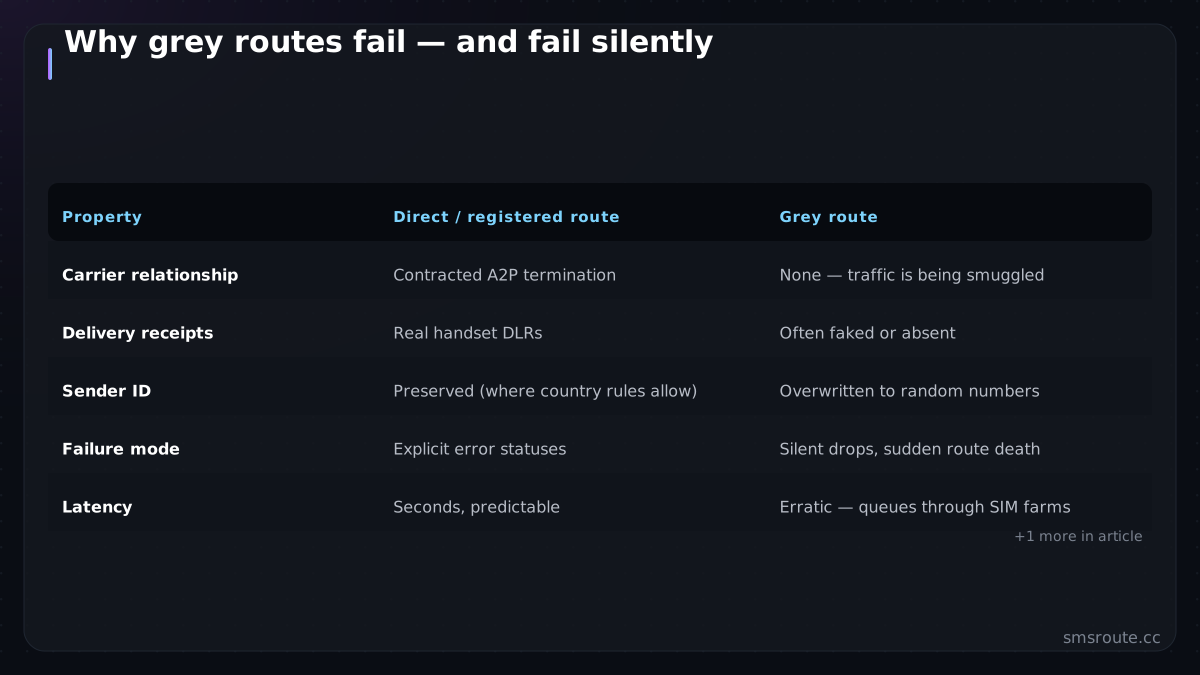
Why grey routes fail — and fail silently
Carriers fight grey traffic because it is unpaid revenue, and their weapons have gotten sharp: firewalls from vendors like Enea and Sinch-owned filters classify traffic patterns, flag consumer SIMs sending at machine cadence, and block entire ranges. The result for the sender is the worst failure mode in messaging — the silent drop. Your provider reports the message as sent; the firewall discards it; no delivery receipt ever tells the truth. Industry analyses of unregistered A2P routes put failure rates at 20-60% (Mordor Intelligence's 2025 A2P market analysis cites this band), which is exactly the range where an OTP flow becomes unusable. If you send 100 one-time passwords, 20 to 60 never reach the user with no error or alert. That means 20 to 60 logins fail silently.
| Property | Direct / registered route | Grey route |
|---|---|---|
| Carrier relationship | Contracted A2P termination | None — traffic is being smuggled |
| Delivery receipts | Real handset DLRs | Often faked or absent |
| Sender ID | Preserved (where country rules allow) | Overwritten to random numbers |
| Failure mode | Explicit error statuses | Silent drops, sudden route death |
| Latency | Seconds, predictable | Erratic — queues through SIM farms |
| Price | Honest market rate | Suspiciously below it |
The route can also die overnight. When a carrier firewall catches a SIM farm, every message on it stops delivering at once — usually mid-campaign, always without notice. Cheap routes are not cheap when you re-send everything twice.
How to spot a grey-route quote
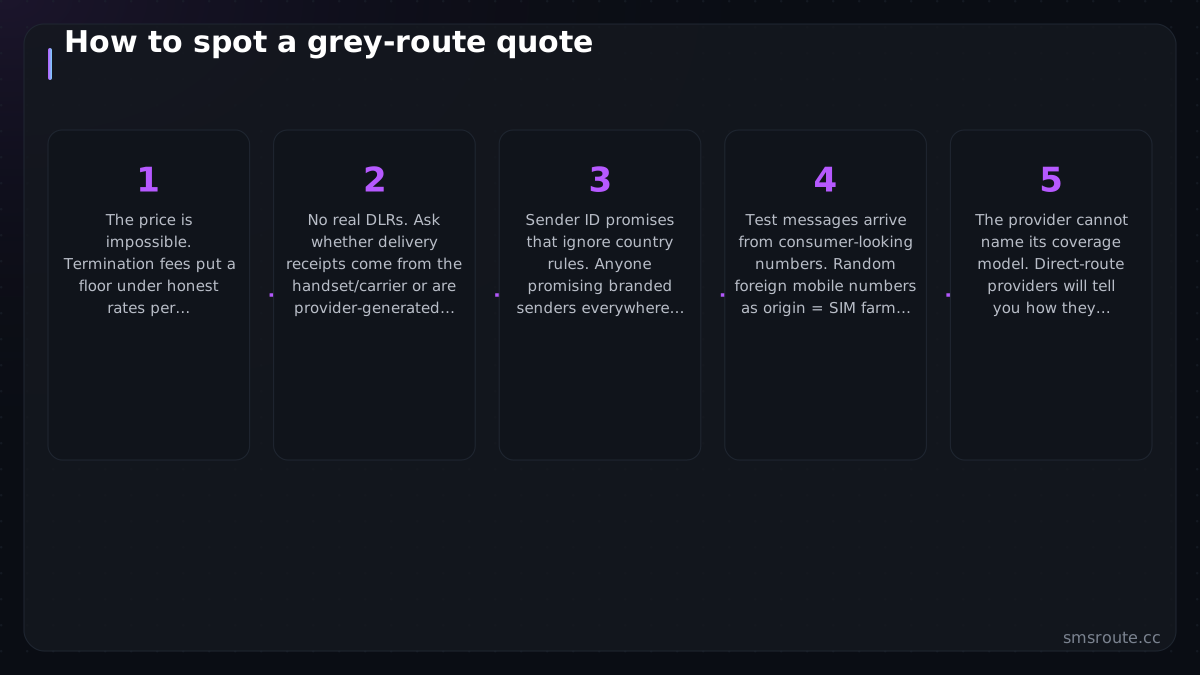
- The price is impossible. Termination fees put a floor under honest rates per destination. A quote dramatically below the market band for that country — the bands our international cost guide explains — is not a bargain, it is a different product.
- No real DLRs. Ask whether delivery receipts come from the handset/carrier or are provider-generated. Evasive answer, grey route.
- Sender ID promises that ignore country rules. Anyone promising branded senders everywhere, including countries with strict registration regimes like the India DLT system, is not routing compliantly.
- Test messages arrive from consumer-looking numbers. Random foreign mobile numbers as origin = SIM farm, nearly always.
- The provider cannot name its coverage model. Direct-route providers will tell you how they terminate traffic; arbitrageurs change routes weekly and cannot.
None of this means paying the most wins. It means the honest range for a destination is
Where we stand, and the test that settles it
SMSRoute is a no-KYC SMS API with crypto billing (BTC, ETH, USDT, XMR, LTC, and SOL), running direct carrier routes across 149 countries. Our per-country rates are public on each destination page, and they sit inside the honest band, not under it. No-KYC describes our onboarding, not our routing: skipping identity paperwork for senders is a different thing entirely from smuggling traffic past carriers, and conflating the two is how grey-route sellers hide. SMSRoute's published route pages list delivery from $0.004/message (premium direct-carrier corridors up to $0.035) with sub-100ms median submission and ~98.6% delivered success (smsroute.cc route pages, 2026).
Fund the smallest possible balance, send test OTPs to real SIMs you control in your actual destination countries, and time them — the methodology in our OTP delivery-rates analysis. Sub-10-second delivery with handset DLRs is a route you can build on. Anything else, walk. Our $5 signup credit exists precisely so that test costs you nothing.
Related reading
FAQ
What is grey route SMS?
Why do grey route messages fail to deliver?
How can I tell if my SMS provider uses grey routes?
Is a no-KYC SMS provider the same as a grey route?
Send your first SMS in 5 minutes
No KYC. Pay with BTC, ETH, USDT, XMR, LTC, and SOL. Live routes to 149 countries.
Get an API key →