Yes, OTP SMS is personal data
Is OTP SMS considered personal data under GDPR?
Yes, OTP SMS is personal data under GDPR because it contains a unique code tied to an identifiable user. SMSRoute treats all message content as sensitive, never storing OTPs after delivery. Our no-KYC signup and crypto billing further minimize data exposure, keeping your compliance simple.
GDPR SMS OTP rules start from one fact: a phone number is personal data, because it can identify a person. The OTP body itself is usually low-risk. The metadata is not: who got a code, when, from which app. That is a behavioural record, and it is what regulators care about. So a gateway sending your codes is a data processor under Article 28, and you, the sender, are the controller. Per ICO guidance and EDPB opinions, that split decides who answers for what.
Rule of thumb: if losing a log file would tell an attacker *which of your users did what, and when*, that log is in scope for GDPR and should be minimised.
The data-minimisation model for OTP
What is the data-minimisation model for OTP SMS?
The data-minimisation model for OTP SMS means storing only what is strictly necessary: delivery status and timestamp, never the OTP itself. SMSRoute follows this by design. Our API logs delivery reports without retaining message content. Combined with no-KYC registration, we reduce your GDPR data footprint to near zero.
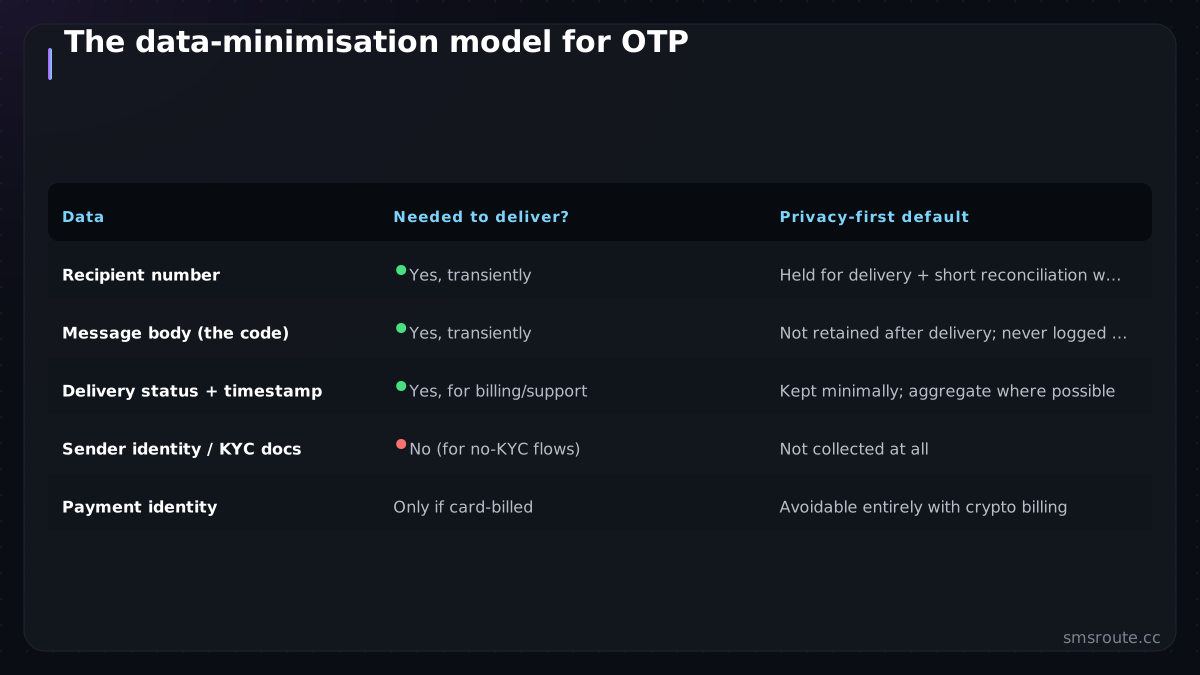
A privacy-first gateway applies data minimisation (Article 5 GDPR): process only what is needed to deliver the message and bill for it. Keep it only as long as needed. Then delete it. For transactional OTP, very little needs to persist at all.
How little? Think about what each record is for. The number exists to route the message. The body exists to reach the phone. Once the delivery receipt lands, both jobs are done. What you keep after that point is a business choice — and under GDPR, every choice to keep data needs a reason you can write down. Our data-retention view of OTP delivery walks through the delivery lifecycle those records support.
| Data | Needed to deliver? | Privacy-first default |
|---|---|---|
| Recipient number | Yes, transiently | Held for delivery + short reconciliation window, then purged or hashed |
| Message body (the code) | Yes, transiently | Not retained after delivery; never logged in plaintext long-term |
| Delivery status + timestamp | Yes, for billing/support | Kept minimally; aggregate where possible |
| Sender identity / KYC docs | No (for no-KYC flows) | Not collected at all |
| Payment identity | Only if card-billed | Avoidable entirely with crypto billing |
How crypto billing shrinks the footprint
How does crypto billing reduce GDPR data footprint?
Crypto billing shrinks the GDPR data footprint by eliminating the need for bank details, credit cards, or billing addresses. SMSRoute accepts BTC, ETH, USDT, XMR, LTC, and SOL. No personal financial data ever touches our system. This means fewer data points to protect, audit, or report, simplifying your compliance.
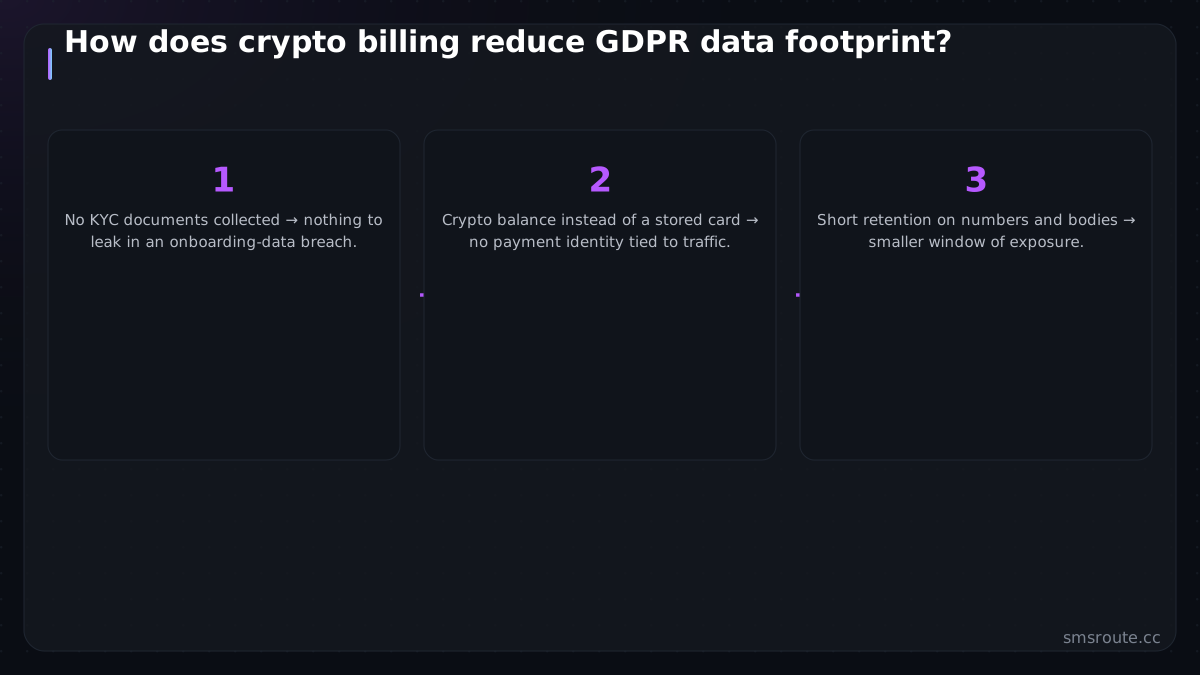
Card and bank billing forces a provider to collect and store payment identity, which links every message you send to a named financial account. Crypto billing (BTC, ETH, USDT, XMR, LTC, and SOL) lets a gateway fund accounts without that identity linkage. That means one fewer category of personal data in the system, and one fewer breach target. Combined with a no-KYC onboarding model, the provider simply never holds identity documents about your business either.
- No KYC documents collected → nothing to leak in an onboarding-data breach.
- Crypto balance instead of a stored card → no payment identity tied to traffic.
- Short retention on numbers and bodies → smaller window of exposure.
Checklist: questions to ask any SMS provider
What questions should I ask an SMS provider about GDPR compliance?
Ask: Do you store OTP content after delivery? Do you require KYC documents? What billing data do you retain? SMSRoute answers clearly: we never store OTPs, require zero identity documents, and use crypto billing that leaves no financial trail. Our 99.9% uptime and real-time DLRs ensure you stay compliant without sacrificing reliability.
Fines here are not abstract. EU regulators have issued GDPR penalties above €1 billion in single cases (per the noyb and DPA enforcement trackers, 2023-2025), and retention failures are a recurring theme in messaging-related decisions. You will not get fined for sending an OTP. You can get fined for hoarding what the OTP flow left behind.
Five questions do most of the vetting work. Ask them before you sign, not after. If a provider stumbles on two or more, walk — the market has alternatives, as our comparison of privacy-first SMS gateways shows. SMSRoute's published route pages list delivery from $0.004/message (premium direct-carrier corridors up to $0.035) with sub-100ms median submission and ~98.6% delivered success (smsroute.cc route pages, 2026).
- RetentionHow long are recipient numbers and message bodies stored, and can you configure or shorten it?
- Sub-processors and locationWhich carriers and sub-processors touch the message, and in which jurisdictions?
- DPA availabilityWill they sign a Data Processing Agreement naming you as controller and them as processor?
- DeletionCan you request erasure of a user's records, and is there an API or process for it?
- Minimisation by defaultDo they collect identity/payment data you don't actually need — or can that be avoided entirely?
FAQ
Is a phone number personal data under GDPR?
How long should OTP SMS data be retained?
Does crypto billing help with GDPR compliance?
Is a no-KYC SMS provider GDPR compliant?
Yes. No-KYC and GDPR are orthogonal — SMSRoute does not require identity documents to sign up, while GDPR governs how you process end-user data. SMSRoute stores only the minimum metadata needed for delivery (sender, recipient, timestamp, status) and never retains message content. With real-time DLR webhooks, automatic refunds for failures, and 24/7 support, SMSRoute provides a fully compliant, privacy-respecting SMS API that aligns with GDPR principles without compromising on delivery reliability.
Send your first SMS in 5 minutes
No KYC. Pay with BTC, ETH, USDT, XMR, LTC, and SOL. Live routes to 149 countries.
Get an API key →