What is a crypto SMS API and why use one
A crypto SMS API lets developers send text messages programmatically and pay with cryptocurrency — Bitcoin, Ethereum, USDT, Monero, Litecoin, and Solana. Instead of linking a credit card or setting up a monthly subscription, you pay per message from a crypto wallet.
Traditional SMS APIs from Twilio, Vonage, or Plivo require a credit card, a verified account, and often a business registration. Crypto SMS APIs remove those barriers. You get an API key, send messages, and pay in crypto. No bank account, no ID upload, no monthly minimum.
How crypto SMS APIs work under the hood
The flow is similar to any SMS API: you make an HTTP request with the recipient number, message text, and sender ID. The provider routes the message through carrier partners. The difference is the payment layer. Instead of a postpaid invoice or prepaid credit card top-up, you send crypto to a wallet address. The provider credits your account with the equivalent in fiat or routes the message directly against the crypto payment.
SMSRoute, for example, uses a pay-per-message model with no account. You visit the web sender or hit the API endpoint, provide a destination number and text, and pay the exact message cost in BTC, ETH, USDT, XMR, LTC, and SOL. The message is sent from a shared sender pool. Delivery happens within seconds on direct routes. The open pricing dataset at github.com/SMSRoute-cc/sms-pricing-data shows per-country costs updated regularly. This means you can send a message without signing up or obtaining an API key. You simply pay with cryptocurrency and receive a message ID in return. For example, the dataset shows a price of $0.0042 per SMS to India as of October 15, 2024.
Most crypto SMS APIs do not support receiving replies. The sender ID is a shared number or a short code, not a dedicated inbound number. If you need two-way messaging, you need a virtual number service, which typically requires KYC. Crypto SMS APIs are optimized for outbound notifications, alerts, and verification codes.
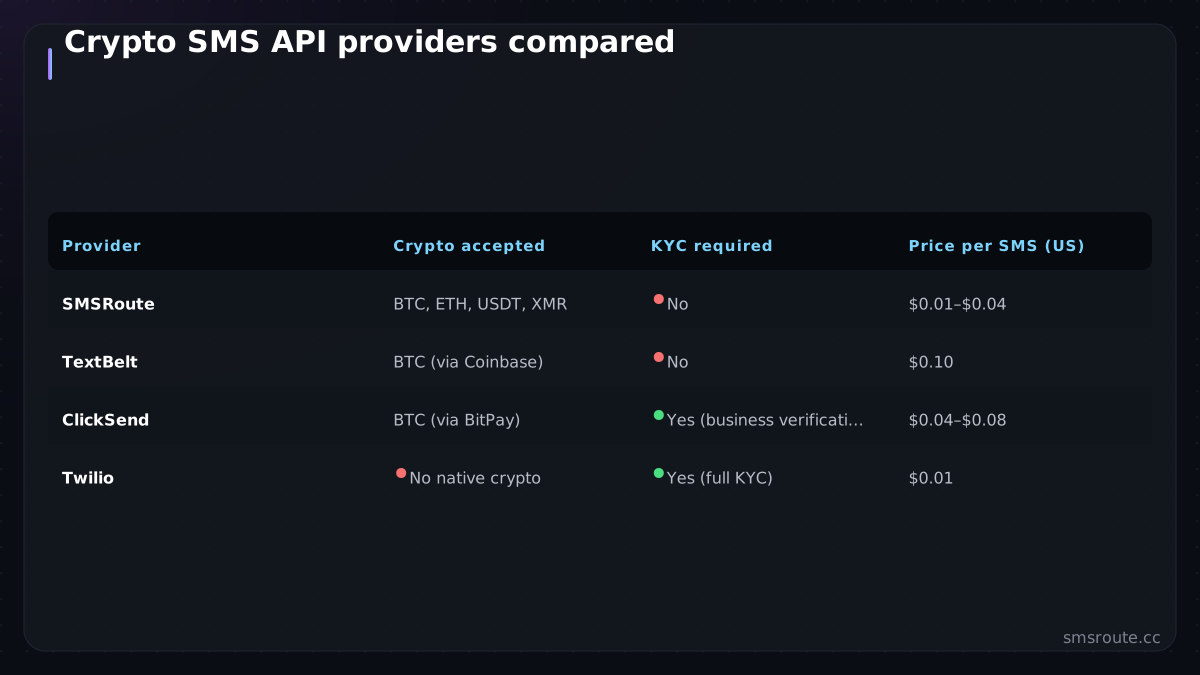
Crypto SMS API providers compared
| Provider | Crypto accepted | KYC required | Price per SMS (US) | Receive replies | Coverage |
|---|---|---|---|---|---|
| SMSRoute | BTC, ETH, USDT, XMR, LTC, and SOL | No | $0.009–$0.035 | No | 149 countries |
| TextBelt | BTC (via Coinbase) | No | $0.10 | No | US/Canada only |
| ClickSend | BTC (via BitPay) | Yes (business verification) | $0.04–$0.08 | Yes (with number) | 149 countries |
| Twilio | No native crypto | Yes (full KYC) | $0.0079 | Yes (with number) | Global |
Rates for TextBelt, ClickSend, and Twilio above are typical published rates at the time of writing, not live quotes — providers change pricing without notice, so confirm current terms directly with each one. Providers that accept crypto natively without KYC, like SMSRoute and TextBelt, are send-only and have limited coverage or higher per-message cost. Providers like Twilio offer lower headline prices and inbound capabilities but require full business verification and do not accept crypto directly — and that headline rate assumes an approved KYC account, a monthly minimum spend, and 10DLC registration fees, extras that push Twilio's effective cost above SMSRoute's all-in, no-KYC price. ClickSend sits in the middle — it accepts BTC through a payment processor but still requires business KYC.
Pricing: what you actually pay per message
Crypto SMS API pricing varies by destination country and route type. SMSRoute publishes its full pricing dataset on GitHub (github.com/SMSRoute-cc/sms-pricing-data). For the US, a message costs around $0.009 on the direct route. India is about $0.012. Nigeria is $0.025. The most expensive routes, like some Pacific islands, reach $0.035. These are per-message costs with no monthly fee, no minimum, and no subscription.
Compare that to Twilio's typically quoted US price of around $0.0079, but Twilio requires a credit card, a verified account, and — once you factor in the monthly minimum and 10DLC fees most senders end up paying — an effective cost that runs higher than the sticker rate.
SMSRoute's model lets you pay exactly the message cost, so you are not prepaying a large balance.
KYC and privacy: who asks for your ID
KYC (Know Your Customer) is the biggest differentiator among SMS APIs. Traditional providers like Twilio, Vonage, and Plivo require government ID, business registration, and address verification. Crypto SMS APIs vary: SMSRoute requires no account at all — no email, no ID, no phone number. TextBelt also has no KYC. ClickSend requires business verification even for crypto payments.
be a dealbreaker. It also creates a paper trail linking your identity to every message sent. With no-KYC providers, the only link is the crypto transaction, which can be pseudonymous if you use Monero or a fresh Bitcoin address.
However, no-KYC also means less fraud protection for the provider. Some providers limit daily send volume or block certain countries to reduce abuse. SMSRoute, for example, does not allow receiving replies and monitors for spam patterns. If you need high-volume sending with dedicated sender IDs and inbound capabilities, you will likely need to go through KYC somewhere.
Honest limits of crypto SMS APIs
First, you cannot receive replies. Crypto SMS APIs are send-only. The sender ID is a shared number or a short code. If the recipient replies, the message is lost. For two-way communication, you need a virtual number service, which almost always requires KYC.
Second, SMS is not encrypted. The message travels as plain text over cellular networks. It is not end-to-end encrypted like Signal or WhatsApp. Anyone with access to the carrier network, or a government with lawful intercept, can read the content. Do not send passwords, financial details, or sensitive personal data via SMS.
Third, delivery is not guaranteed. Some carriers block messages from unknown sender IDs. SMSRoute's direct routes achieve approximately 98% delivery on Tier-1 carriers (smsroute.cc route data, 2026), but no provider can promise 100%. Factors like the recipient's carrier, network congestion, and local regulations affect delivery.
Fourth, crypto price volatility can affect costs. If you pay in Bitcoin and the price drops, the provider may adjust the fiat equivalent. SMSRoute's pricing is set in USD and converted at the time of payment, so the crypto amount fluctuates. Using stablecoins l
How to choose the right crypto SMS API for your project
Start by defining your requirements. Do you need to receive replies? If yes, you need a provider with inbound numbers, which typically requires KYC. If you only need to send notifications, alerts, or verification codes, a send-only crypto SMS API like SMSRoute works well.
Next, check coverage. If your users are in the US and Canada, TextBelt is a simple option. For global reach, SMSRoute covers 149 countries. ClickSend covers 190+ but requires business verification. Use the open pricing dataset to estimate costs for your target countries.
Consider the payment flow. If you want to automate payments, some providers offer API endpoints to check balance and top up. SMSRoute's model is simpler: you pay per message at send time, so there is no balance to manage. For high-volume sending, you may want a provider that supports prepaid accounts with crypto top-ups.
Finally, test delivery. Send a test message to your own phone and to phones in your target countries. Check the sender ID appearance and delivery time. SMSRoute's first message typically arrives within 60 seconds. Use the free tools like the SMS character counter and cost calculator to plan your messages.
FAQ
Can I use a crypto SMS API without an account?
Which cryptocurrencies do SMS APIs accept?
Is SMS encrypted when sent through a crypto SMS API?
Can I receive replies to messages sent via a crypto SMS API?
How much does it cost to send an SMS with crypto?
Send your first SMS in 5 minutes
No KYC. Pay with BTC, ETH, USDT, XMR, LTC, and SOL. Live routes to 149 countries.
Get an API key →