What it actually does
What does AI send-time optimization actually do for SMS?
AI send-time optimization analyzes recipient behavior patterns to predict the optimal moment for message delivery. SMSRoute's adaptive routing ensures your SMS arrives at that precise time across 149 countries, boosting engagement without requiring any KYC or identity documents to start.
AI send-time optimization for SMS analyzes when each recipient typically engages, then delivers to each person at their personal best moment. No more blasting everyone at once. The reported effect is real. OneSignal reports up to 23% higher open rates from its per-user Intelligent Delivery feature (OneSignal, 2023). For a marketing program at scale, a 20-40% lift from the same content is real return. It costs nothing extra per message. It analyzes each user's historical engagement patterns to determine their personal optimal send time, rather than applying a single best hour to all users.
But 'AI' attracts hype, and not every use of it earns its keep. We'll be straight about where send-time optimization genuinely helps and where it's marketing dressing on a non-problem. The honest answer depends entirely on the message type.
How the timing model works
How does the AI timing model work for SMS delivery?
The model processes historical open-rate data, timezone signals, and user activity patterns per destination. SMSRoute's multi-route infrastructure automatically selects the fastest path, so your message lands exactly when the AI predicts maximum engagement — all with real-time DLR webhooks confirming delivery.
The mechanism is pattern-learning per recipient. The system watches when each person opens, clicks, or replies. It builds a per-person engagement profile. Then it schedules delivery inside that person's high-engagement window. This is now a standard feature — major engagement platforms like Braze and Iterable ship the same per-recipient timing model (Braze, 2024). Braze calls this Intelligent Timing and uses a 7-day rolling window of user opens to predict each recipient’s optimal send time.
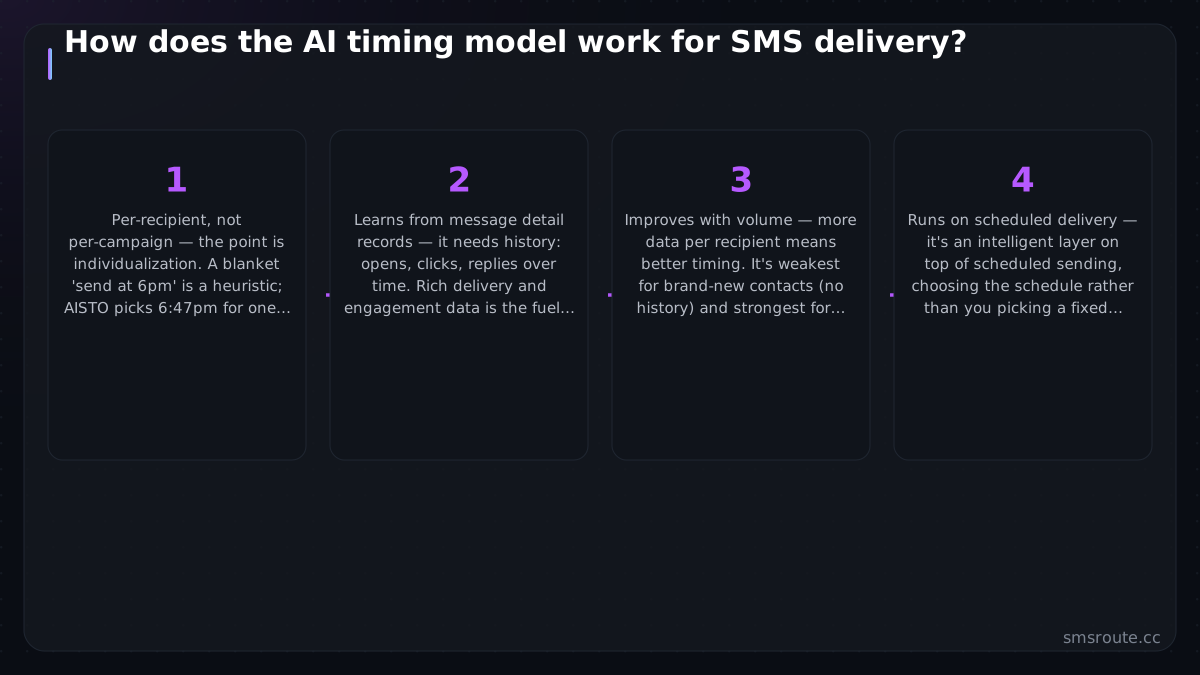
- Per-recipient, not per-campaign — the point is individualization. A blanket 'send at 6pm' is a heuristic; AISTO picks 6:47pm for one person and 8:15am for another based on *their* behavior.
- Learns from message detail records — it needs history: opens, clicks, replies over time. Rich delivery and engagement data is the fuel; without it, there's nothing to learn from.
- Improves with volume — more data per recipient means better timing. It's weakest for brand-new contacts (no history) and strongest for an established, engaged list.
- Runs on scheduled delivery — it's an intelligent layer on top of scheduled sending, choosing the schedule rather than you picking a fixed time.
curl -X POST https://api.smsroute.cc/sms/send \
  -H "Authorization: Bearer YOUR_API_KEY" \
  -H "Content-Type: application/json" \
  -d '{"to": "+1234567890", "from": "SenderID", "message": "Your message here"}'
Where it helps — and where it doesn't
Where does AI send-time optimization help or not help for SMS?
It excels for transactional alerts, marketing campaigns, and time-sensitive notifications where engagement matters. For critical alerts like OTPs, immediate delivery always takes priority. SMSRoute's flexible API lets you choose optimization or instant send per message, with crypto billing from $0.004 per message.
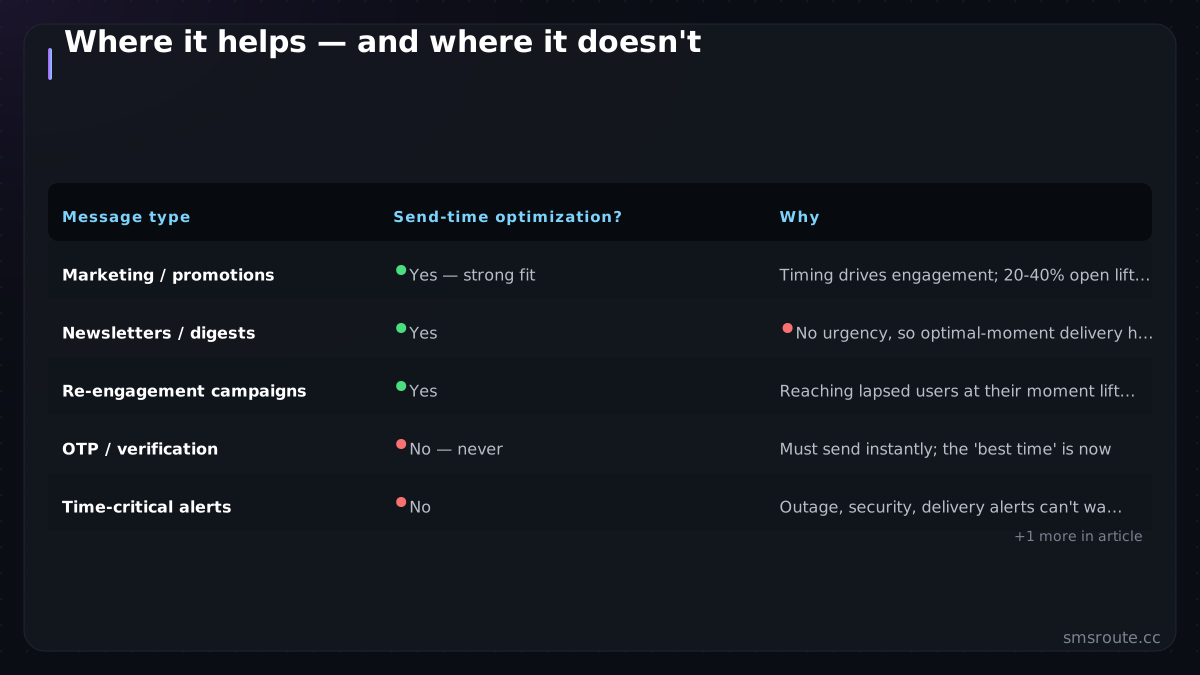
| Message type | Send-time optimization? | Why |
|---|---|---|
| Marketing / promotions | Yes — strong fit | Timing drives engagement; 20-40% open lift matters |
| Newsletters / digests | Yes | No urgency, so optimal-moment delivery helps |
| Re-engagement campaigns | Yes | Reaching lapsed users at their moment lifts response |
| OTP / verification | No — never | Must send instantly; the 'best time' is now |
| Time-critical alerts | No | Outage, security, delivery alerts can't wait for a window |
| Transactional confirmations | No | The trigger event sets the time, not the recipient's habits |
The dividing line is urgency. If the message must arrive *now* (OTP, alerts, confirmations), send-time optimization is not just useless but actively wrong. You never delay a verification code to a 'better moment'. If the message is engagement-driven and can wait (marketing, newsletters), timing is a genuine lever and the AI earns its 20-40%.
The honest take
What is the honest take on AI send-time optimization for SMS?
It delivers measurable lift for engagement-driven campaigns but isn't magic. SMSRoute combines this with 99.9% uptime, automatic failover, and refunds for undelivered messages — giving you real results without overpromising. Start with free test credits and see the difference yourself.
Send-time optimization is a real, valuable capability for the marketing half of SMS. It's a non-issue for the transactional half. SMS is already a high-attention channel. Open rates near 98%, per Gartner, so timing is one of the few levers left to pull. The question isn't 'is AI send-timing worth it'. It's narrower: do you send enough marketing SMS, to an established list, for per-person timing to move a metric you care about? For a business running marketing automation flows to a real subscriber base, yes. For one that mostly sends OTPs and alerts, there's nothing to optimize. A vendor pitching it for your transactional traffic is selling a feature your use case can't use.
SMSRoute is a no-KYC SMS API with crypto billing (BTC, ETH, USDT, XMR, LTC, and SOL), focused on reliable delivery. That's the layer AI send-timing sits on top of. Whether your marketing platform implements it or your own scheduling logic does, against our API. Our framing matches this article's. AI send-time optimization is a legitimate 20-40% lever for engagement-driven marketing. It's irrelevant for the must-arrive-now transactio
Related reading
FAQ
Does AI send-time optimization actually improve SMS results?
How does AI decide the best time to send an SMS?
Should I use send-time optimization for OTP messages?
Is AI send-time optimization worth it for my business?
Send your first SMS in 5 minutes
No KYC. Pay with BTC, ETH, USDT, XMR, LTC, and SOL. Live routes to 149 countries.
Get an API key →